Buy anatomy46.eu ?
We are moving the project
anatomy46.eu .
Are you interested in purchasing the domain
anatomy46.eu ?
domain@kv-gmbh.de · 0541-91531010
Buy anatomy46.eu ?
When do you use "dont" in French?
"Dont" is used in French to indicate possession or to replace the preposition "de" followed by a noun. It is used when the noun being replaced is the object of the verb in the relative clause. For example, "La fille dont j'ai parlé" (The girl I talked about) or "Le livre dont tu as besoin" (The book you need). **
Is there a difference between dont and duquel?
Yes, there is a difference between "dont" and "duquel" in French. "Dont" is used to indicate possession or relationship and is equivalent to "whose" or "of which" in English. For example, "le livre dont je t'ai parlé" means "the book that I told you about." On the other hand, "duquel" is a relative pronoun that is used to refer to a specific noun with a preposition, such as "le livre duquel je t'ai parlé" meaning "the book about which I told you." So, while both words are used to introduce relative clauses, they are used in different contexts and have different meanings. **

Similar search terms for Dont
Top-Angebote
Products related to Dont:
-
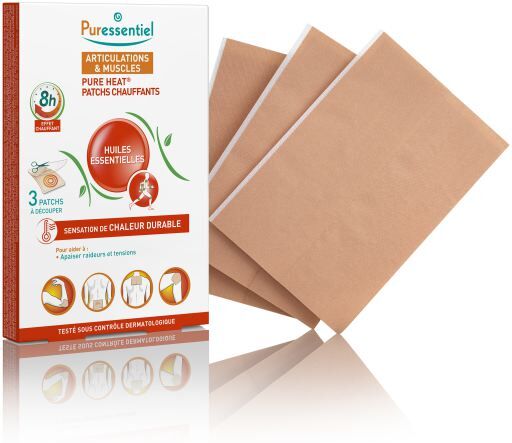
Puressentiel Pure Heat Heat Patches for Joints and Muscles, 3 pcsHealth and Beauty First aid kit Puressentiel Pure Heat Heat Patches for Joints and Muscles, 3 pcs Heating patches for muscles and joints help relax and relieve muscle tension. Its formula based on 100% natural ingredients, combining 14 essential oils and Capsicum, provides a pleasant sensation of heat for 8 hours, which promotes muscle relaxation. The flexible patch adapts to all movements. Heating patches for muscles and joints help relax and relieve muscle tension. Its formula is made from 100% natural ingredients, combining 14 essential oils (Cajeput, Roman Chamomile, Clove, Eucalyptus, Eastern Berry, Juniper, Lavandin, Marjoram, Mint, Niaouli, Nutmeg, Pine, Rosemary, Turpentine) and Capsicum. It provides a pleasant sensation of heat for 8 hours, which promotes muscle relaxation. The flexible patch adapts to all movements, is odorless, and can be cut to the desired size and applied directly to the following body areas: back, knees, neck, shoulders, elbows, wrists, thighs, calves. Directions: The patch should be applied to healthy, dry, non-greasy skin. It should not be applied to wounds, sensitive skin, the face, irritated skin, or mucous membranes, especially after waxing or shaving. Avoid applying it to areas of the body that may be constricted (tight clothing, the inner fold of the elbow, behind the knee, etc.). The patch produces a warming sensation, the intensity and duration of which varies depending on the individual's reaction. If you feel a burning sensation, develop a skin irritation, or develop an allergy, remove the patch immediately. Do not use it for more than 8 hours. Warnings: Not recommended for children under 15 years of age, pregnant or breastfeeding women, or people with a history of seizures or epileptic attacks. Do not use if you are allergic to salicylates or any of the ingredients. Keep out of reach of children.13,06 £*Shipping: 3,99 £Secure redirect to the provider
-
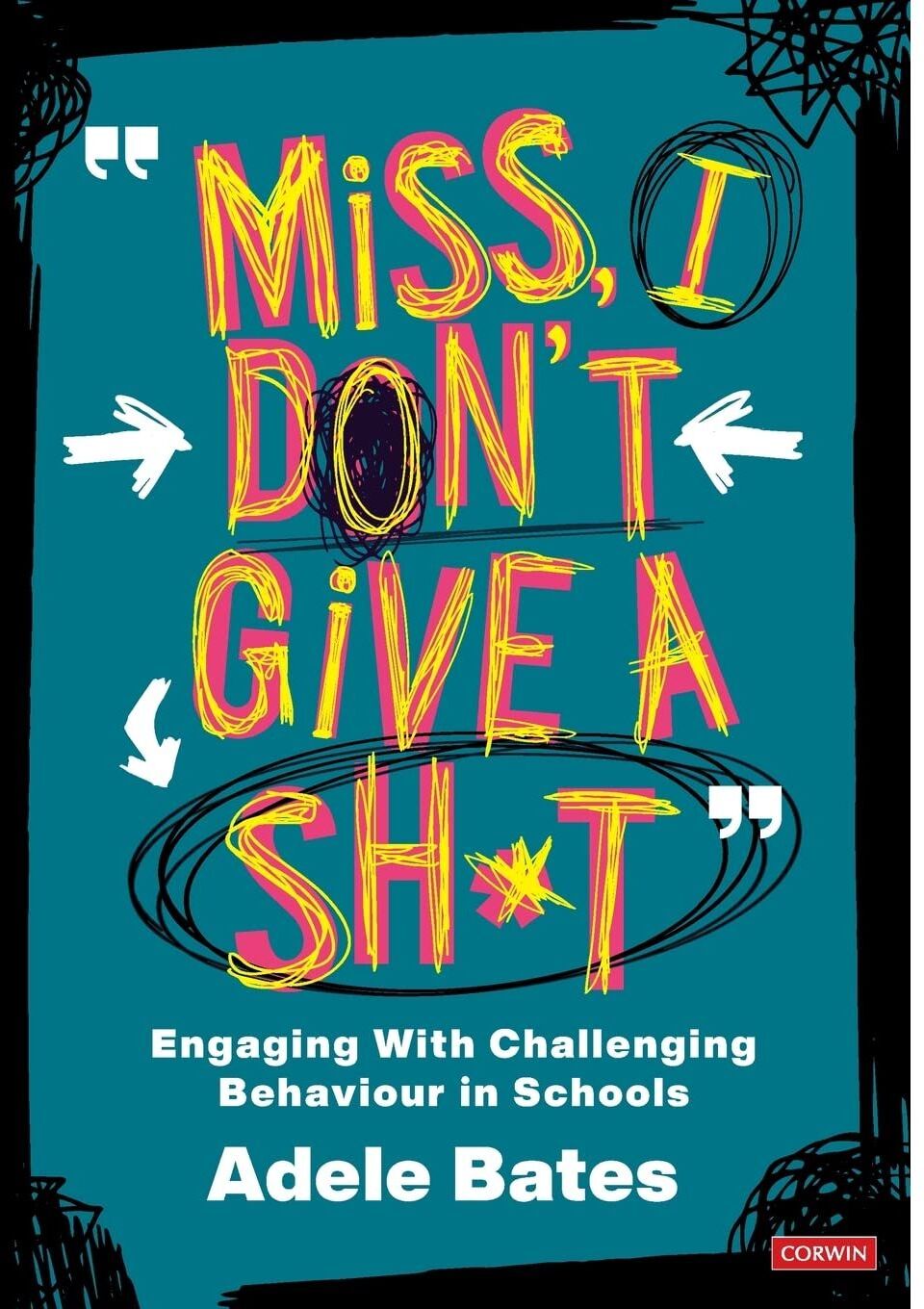
SAGE Publications Miss, I dont give a sh*t : Engaging with challenging behaviour in schoolsDo you want to be an inspiring teacher for everyone you teach, even the trickier cherubs in your class? Or maybe you just want to get through a lesson without a desk flying at you or a blazer being set alight? In this down-to-earth book Adele Bates shares practical approaches, strategies and tips from the classroom on how to help pupils with behavioural needs thrive with their education. Packed full of real-life classroom scenarios, student voice and relevant theory, every chapter offers an Action Box helping you to implement these strategies – next lesson, next week and long term. From relationship building and teaching self-regulation, to fostering inclusivity, paying attention to your own self-care and schoolwide approaches, Adele Bates unpicks some of the most difficult aspects of being a teacher and empowers you to grow as a confident classroom professional.15,69 £*Shipping: 2,99 £Secure redirect to the provider
-
Wb Tom And Jerry DonT Open Till Xmas 18X18 Printed Throw Pillow by The Northwest in O"Elevate your Holiday comfort game with our Warner Bros. Tom and Jerry ""Dont Open till Xmas"" Soft and Comfortable Double-Sided Pillow. Measuring 18""W x 18""L, this pillow is the perfect size to snuggle up with on the couch or add a touch of comfort to..."29,99 $*Shipping: 11,98 $Secure redirect to the provider

-
Which French relative pronouns are there: lequel or dont?
The French relative pronouns "lequel" and "dont" both serve different purposes. "Lequel" is used to refer to a specific noun and has different forms depending on the gender and number of the noun it refers to. On the other hand, "dont" is used to indicate possession or to introduce a relative clause with verbs that require the preposition "de." Both pronouns are important for constructing complex sentences and adding specificity to the language. **
-
What is the difference between "dont" and "duquel" in French?
In French, "dont" and "duquel" are both relative pronouns used to introduce a clause that provides additional information about a noun. However, "dont" is used to replace "de + qui/que" and is used when the main verb requires the preposition "de." On the other hand, "duquel" is used to replace "de + lequel/laquelle/lesquels/lesquelles" and is used when the main verb requires the preposition "de" and the noun is masculine singular or plural. In summary, "dont" is used to replace "de + qui/que" and "duquel" is used to replace "de + lequel/laquelle/lesquels/lesquelles." **
-
Which of them (de laquelle, duquel or dont) is grammatically correct?
The correct choice depends on the gender and number of the noun it refers to. "De laquelle" is used for feminine singular nouns, "duquel" is used for masculine singular nouns, and "dont" is used for both masculine and feminine singular or plural nouns. It's important to match the relative pronoun with the noun it refers to in terms of gender and number. **
-
Can you help me with the French relative pronouns lequel and dont?
Of course! The relative pronoun "lequel" is used to refer to a previously mentioned noun and can be masculine, feminine, singular, or plural. It has different forms depending on the gender and number of the noun it refers to. On the other hand, "dont" is used to replace "de + noun" and is used to indicate possession or relationship. It is used to connect a main clause to a subordinate clause. I can provide more specific examples or help with any other questions you may have about these relative pronouns. **
When do we use ce qui, ce que, qui, que, dont, and lequel?
We use "ce qui" when the subject of the verb is unknown or unspecified. "Ce que" is used when the object of the verb is unknown or unspecified. "Qui" is used as the subject of the verb, while "que" is used as the direct object of the verb. "Dont" is used to indicate possession or relationship, and "lequel" is used to refer to a specific noun that has been previously mentioned. **
Why do some people find blood and organs disgusting?
Some people find blood and organs disgusting due to a combination of cultural, psychological, and evolutionary factors. Culturally, there may be taboos or stigmas surrounding blood and bodily organs, leading to a learned aversion. Psychologically, the sight of blood and organs may trigger a fear response or feelings of disgust, which can be influenced by individual differences in sensitivity and past experiences. From an evolutionary perspective, disgust towards blood and organs may have developed as a way to avoid potential sources of infection or disease, as they can carry pathogens. Overall, the aversion to blood and organs can be influenced by a complex interplay of cultural, psychological, and evolutionary factors. **
Top-Angebote
Products related to Dont:
-
HARPERCOLLINS Lifespan: Why We Age and Why We Dont Have ToLifespan - Why We Age and Why We Dont Have To Description In this paradigm-shifting book from acclaimed Harvard Medical School doctor and one of TIME magazine's 100 most influential people on earth; Dr. David Sinclair reveals that everything we think we know about ageing is wrong; and shares the surprising; scientifically-proven methods that can help readers live younger; longer. For decades; the medical community has looked to a variety of reasons for why we age; and the consensus is that no one dies of old age; they die of age-related diseases. That's because ageing is not a disease - it is inevitable. But what if everything you think you know about ageing is wrong?What if ageing is a disease? And that disease is curable. In LIFESPAN; Dr. David Sinclair; one of the world's foremost authorities on genetics and ageing; argues just that. He has dedicated his life's work to chasing more than a longer lifespan - he wants to enable people to live longer; healthier; and disease-free well into our hundreds. In this book; he reveals a bold new theory of ageing; one that pinpoints a root cause of ageing that lies in an ancient genetic survival circuit. This genetic trick - a circuit designed to halt reproduction in order to repair damage to the genome -has enabled earth's early microcosms to survive and evolve into more advanced organisms. But this same survival circuit is the reason we age: as genetic damage accumulates over our lifespans from UV rays; environmental toxins; and unhealthy diets; our genome is overwhelmed; causing gray hair; wrinkles; achy joints; heart issues; dementia; and; ultimately; death. But genes aren't our destiny; we have more control over them than we've been taught to believe. We can't change our DNA; but we can harness the power of the epigenome to realise the true potential of our genes. Drawing on his cutting-edge findings at the forefront of medical research; Dr. Sinclair will provide a scientifically-proven roadmap to reverse the genetic clock by activating our vitality genes; so we can live younger longer. Readers will discover how a few simple lifestyle changes - like intermittent fasting; avoiding too much animal protein; limiting sugar; avoiding x-rays; exercising with the right intensity; and even trying cold therapy - can activate our vitality genes. Dr. Sinclair ends the book with a look to the near future; exploring what the world might look like - and what will need to change - when we are all living well to 120 or more. Dr. Sinclair takes what we have long accepted as the limits of human potential and mortality and turns them into choices. THE EVOLUTION OF AGEING is destined to be the biggest book on genes; biology; and longevity of this decade.7,95 £*Shipping: 2,99 £Secure redirect to the provider
-
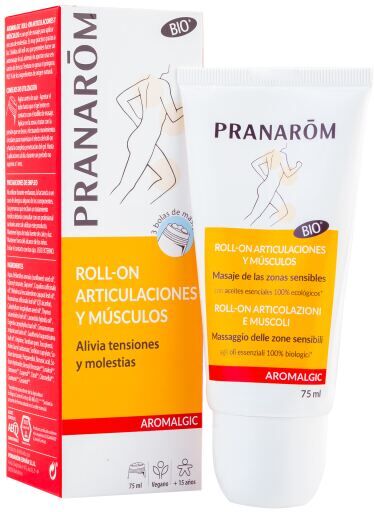
Pranarom Aromalgic Roll On Joints and Muscles 75 ml 75 mlHealth and Beauty First aid kit Pranarom Aromalgic Roll On Joints and Muscles 75 ml 75 ml What is Pranarom Aromalgic Roll On Joints and Muscles 75 ml? Pranarom Aromalgic Roll-On Joints and Muscles 75 ml is a natural treatment based on 100% pure and natural essential oils, designed to provide immediate and long-lasting relief to joints and muscles . Its roll-on format allows for precise, easy application without getting your hands dirty, ideal for use at any time of day. This product combines the soothing properties of essential oils such as eucalyptus, peppermint, clove, and wintergreen, all known for their benefits in treating muscle and joint pain. It is an effective option for those seeking natural relief without resorting to conventional pharmaceuticals. Who is it for? Pranarom Aromalgic Roll On Joints and Muscles 75 ml is indicated for: People with occasional or chronic joint pain. Athletes who need relief from muscle discomfort after exercise. Individuals who suffer from muscle tension due to stress or poor posture. Older adults with joint stiffness or discomfort. People who prefer natural solutions based on scientific aromatherapy. How do I apply it? Using Pranarom Aromalgic Roll On Joints and Muscles 75 ml is very simple thanks to its practical roll-on format: Shake before use to activate all ingredients. Apply directly to the affected area (shoulders, knees, neck, back, etc.). Glide the roll-on in a circular motion for a few seconds. Massage with your hands is not necessary, but you can do so if desired to increase product penetration. Use up to 3 times a day as needed. Product use Pranarom Aromalgic Roll-On Joints and Muscles 75 ml acts quickly and effectively to promote well-being and mobility , offering an immediate sensation of freshness followed by a comforting effect. Its notable uses include: **Relieve joint pain** caused by arthritis, osteoarthritis, or overload. **Reduce muscle tension** caused by stress, poor posture, or physical exertion. **Facilitate post-workout recovery**, ideal for athletes and active people. **Reduce morning stiffness** in older people or those with limited mobility. **Natural alternative to traditional topical pain relievers**, without harsh chemicals or systemic side effects. Thanks to its composition, rich in biochemically defined essential oils, this roll-on not only targets pain but also improves local circulation and promotes muscle tissue regeneration. Plus, its compact size makes it perfect for carrying in your purse, gym bag, or even in the car. Buy Pranarom Aromalgic Roll On Joints and Muscles 75 ml If you're looking for an effective, natural, and convenient solution to relieve your muscle and joint pain, Pranarom Aromalgic Roll-On Joints and Muscles 75 ml is your best choice. It provides fast relief thanks to the synergistic action of essential oils, in a convenient, portable format that adapts to your lifestyle. Place your order today and discover the benefits of aromatherapy applied to muscle...13,62 £*Shipping: 3,99 £Secure redirect to the provider
-
Puressentiel Pure Heat Heat Patches for Joints and Muscles, 3 pcsHealth and Beauty First aid kit Puressentiel Pure Heat Heat Patches for Joints and Muscles, 3 pcs Heating patches for muscles and joints help relax and relieve muscle tension. Its formula based on 100% natural ingredients, combining 14 essential oils and Capsicum, provides a pleasant sensation of heat for 8 hours, which promotes muscle relaxation. The flexible patch adapts to all movements. Heating patches for muscles and joints help relax and relieve muscle tension. Its formula is made from 100% natural ingredients, combining 14 essential oils (Cajeput, Roman Chamomile, Clove, Eucalyptus, Eastern Berry, Juniper, Lavandin, Marjoram, Mint, Niaouli, Nutmeg, Pine, Rosemary, Turpentine) and Capsicum. It provides a pleasant sensation of heat for 8 hours, which promotes muscle relaxation. The flexible patch adapts to all movements, is odorless, and can be cut to the desired size and applied directly to the following body areas: back, knees, neck, shoulders, elbows, wrists, thighs, calves. Directions: The patch should be applied to healthy, dry, non-greasy skin. It should not be applied to wounds, sensitive skin, the face, irritated skin, or mucous membranes, especially after waxing or shaving. Avoid applying it to areas of the body that may be constricted (tight clothing, the inner fold of the elbow, behind the knee, etc.). The patch produces a warming sensation, the intensity and duration of which varies depending on the individual's reaction. If you feel a burning sensation, develop a skin irritation, or develop an allergy, remove the patch immediately. Do not use it for more than 8 hours. Warnings: Not recommended for children under 15 years of age, pregnant or breastfeeding women, or people with a history of seizures or epileptic attacks. Do not use if you are allergic to salicylates or any of the ingredients. Keep out of reach of children.13,06 £*Shipping: 3,99 £Secure redirect to the provider
-
SAGE Publications Miss, I dont give a sh*t : Engaging with challenging behaviour in schoolsDo you want to be an inspiring teacher for everyone you teach, even the trickier cherubs in your class? Or maybe you just want to get through a lesson without a desk flying at you or a blazer being set alight? In this down-to-earth book Adele Bates shares practical approaches, strategies and tips from the classroom on how to help pupils with behavioural needs thrive with their education. Packed full of real-life classroom scenarios, student voice and relevant theory, every chapter offers an Action Box helping you to implement these strategies – next lesson, next week and long term. From relationship building and teaching self-regulation, to fostering inclusivity, paying attention to your own self-care and schoolwide approaches, Adele Bates unpicks some of the most difficult aspects of being a teacher and empowers you to grow as a confident classroom professional.15,69 £*Shipping: 2,99 £Secure redirect to the provider
-
When do you use "dont" in French?
"Dont" is used in French to indicate possession or to replace the preposition "de" followed by a noun. It is used when the noun being replaced is the object of the verb in the relative clause. For example, "La fille dont j'ai parlé" (The girl I talked about) or "Le livre dont tu as besoin" (The book you need). **
-
Is there a difference between dont and duquel?
Yes, there is a difference between "dont" and "duquel" in French. "Dont" is used to indicate possession or relationship and is equivalent to "whose" or "of which" in English. For example, "le livre dont je t'ai parlé" means "the book that I told you about." On the other hand, "duquel" is a relative pronoun that is used to refer to a specific noun with a preposition, such as "le livre duquel je t'ai parlé" meaning "the book about which I told you." So, while both words are used to introduce relative clauses, they are used in different contexts and have different meanings. **
-
Which French relative pronouns are there: lequel or dont?
The French relative pronouns "lequel" and "dont" both serve different purposes. "Lequel" is used to refer to a specific noun and has different forms depending on the gender and number of the noun it refers to. On the other hand, "dont" is used to indicate possession or to introduce a relative clause with verbs that require the preposition "de." Both pronouns are important for constructing complex sentences and adding specificity to the language. **
-
What is the difference between "dont" and "duquel" in French?
In French, "dont" and "duquel" are both relative pronouns used to introduce a clause that provides additional information about a noun. However, "dont" is used to replace "de + qui/que" and is used when the main verb requires the preposition "de." On the other hand, "duquel" is used to replace "de + lequel/laquelle/lesquels/lesquelles" and is used when the main verb requires the preposition "de" and the noun is masculine singular or plural. In summary, "dont" is used to replace "de + qui/que" and "duquel" is used to replace "de + lequel/laquelle/lesquels/lesquelles." **
Similar search terms for Dont
-
Wb Tom And Jerry DonT Open Till Xmas 18X18 Printed Throw Pillow by The Northwest in O"Elevate your Holiday comfort game with our Warner Bros. Tom and Jerry ""Dont Open till Xmas"" Soft and Comfortable Double-Sided Pillow. Measuring 18""W x 18""L, this pillow is the perfect size to snuggle up with on the couch or add a touch of comfort to..."29,99 $*Shipping: 11,98 $Secure redirect to the provider
-
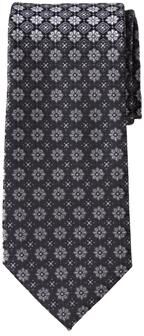
Men's Big & Tall Extra Long Classic Paisley Tie by KS Signature in Black Floral Dont Use Necktie"Our extra-long ties are the perfect length for the big & tall man and the eye-catching paisley print is a handsome finishing touch to any suit. Paisley patternExtra long 62"" length; 3 1/4 in. widthPolyester5"" longer than the standard tie lengthDry..."29,99 $*Shipping: 0,00 $Secure redirect to the provider
-
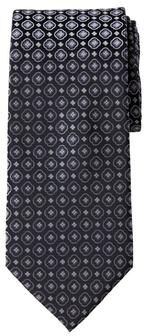
Men's Big & Tall KS Signature Extra Long Classic Geo Tie by KingSize in Midnight Black Dont Use Necktie"Our extra-long ties are the perfect length for the big & tall man and the eye-catching geo print is a fresh finishing touch to any suit. Geo patternExtra long 62"" length; 3 1/4 inch width5"" longer than the standard tie lengthPolyesterDry..."29,99 $*Shipping: 0,00 $Secure redirect to the provider
-
Which of them (de laquelle, duquel or dont) is grammatically correct?
The correct choice depends on the gender and number of the noun it refers to. "De laquelle" is used for feminine singular nouns, "duquel" is used for masculine singular nouns, and "dont" is used for both masculine and feminine singular or plural nouns. It's important to match the relative pronoun with the noun it refers to in terms of gender and number. **
-
Can you help me with the French relative pronouns lequel and dont?
Of course! The relative pronoun "lequel" is used to refer to a previously mentioned noun and can be masculine, feminine, singular, or plural. It has different forms depending on the gender and number of the noun it refers to. On the other hand, "dont" is used to replace "de + noun" and is used to indicate possession or relationship. It is used to connect a main clause to a subordinate clause. I can provide more specific examples or help with any other questions you may have about these relative pronouns. **
-
When do we use ce qui, ce que, qui, que, dont, and lequel?
We use "ce qui" when the subject of the verb is unknown or unspecified. "Ce que" is used when the object of the verb is unknown or unspecified. "Qui" is used as the subject of the verb, while "que" is used as the direct object of the verb. "Dont" is used to indicate possession or relationship, and "lequel" is used to refer to a specific noun that has been previously mentioned. **
-
Why do some people find blood and organs disgusting?
Some people find blood and organs disgusting due to a combination of cultural, psychological, and evolutionary factors. Culturally, there may be taboos or stigmas surrounding blood and bodily organs, leading to a learned aversion. Psychologically, the sight of blood and organs may trigger a fear response or feelings of disgust, which can be influenced by individual differences in sensitivity and past experiences. From an evolutionary perspective, disgust towards blood and organs may have developed as a way to avoid potential sources of infection or disease, as they can carry pathogens. Overall, the aversion to blood and organs can be influenced by a complex interplay of cultural, psychological, and evolutionary factors. **
* All prices are inclusive of VAT and, if applicable, plus shipping costs. The offer information is based on the details provided by the respective shop and is updated through automated processes. Real-time updates do not occur, so deviations can occur in individual cases. ** Note: Parts of this content were created by AI.