Buy anatomy46.eu ?
We are moving the project
anatomy46.eu .
Are you interested in purchasing the domain
anatomy46.eu ?
domain@kv-gmbh.de · 0541-91531010
Buy anatomy46.eu ?
Why do some people find blood and organs disgusting?
Some people find blood and organs disgusting due to a combination of cultural, psychological, and evolutionary factors. Culturally, there may be taboos or stigmas surrounding blood and bodily organs, leading to a learned aversion. Psychologically, the sight of blood and organs may trigger a fear response or feelings of disgust, which can be influenced by individual differences in sensitivity and past experiences. From an evolutionary perspective, disgust towards blood and organs may have developed as a way to avoid potential sources of infection or disease, as they can carry pathogens. Overall, the aversion to blood and organs can be influenced by a complex interplay of cultural, psychological, and evolutionary factors. **
Do Pokémon have organs like flesh or muscles like a human?
Pokémon are fictional creatures, and their anatomy is not fully explained in the Pokémon universe. However, they are often depicted as having physical bodies with flesh, muscles, and other organs similar to those of real animals. In the Pokémon games, TV shows, and movies, they are shown to have physical forms and exhibit behaviors that suggest they have internal organs and musculature. While the specifics of their anatomy may not be fully detailed, it is generally understood that Pokémon have physical bodies with similar biological components to real animals. **

Similar search terms for Anemometer
Top-Angebote
Products related to Anemometer:
-
Testo 416 Digital 16mm Vane AnemometerWith the compact 16 mm vane anemometer Testo 416 with telescopic probe and App connection, you can carry out flow measurements in the ventilation ducts of air conditioning and ventilation systems easily, quickly and precisely. The integrated telescope can be extended up to 850 mm, making it easier to work overhead or in large diameter ducts. To ensure that you have all the relevant information at your fingertips, the testo 416 automatically calculates time and point average values as well as the volume flow rate. And thanks to the compact design and the robust housing, the vane anemometer can also stand it if conditions get a little rougher at times. Configuration of the measuring instrument, display and storage of measured values as well as documentation are all particularly convenient with the Testo Smart App. This also turns your smartphone into a second display. The compac519,18 £*Shipping: 0,00 £Secure redirect to the provider
-
Testo 417 Vane Anemometer - Kit 1The compact Testo 417 Vane Anemometer Set 1 is designed to simplify the process of measuring airflow on air inlets, outlets, and plate outlets of air conditioning and ventilation systems. Equipped with an integrated 100 mm vane, this anemometer ensures precise results quickly. The device automatically calculates time and point average values as well as volume flow, displaying them clearly for efficient adjustment of balanced residential ventilation systems. Key Features Integrated 100 mm Vane: Delivers quick and accurate measurements. Automatic Calculations: Time and point averages, along with volume flow, are computed and displayed. Efficient Ventilation Adjustment: Ideal for balanced res468,00 £*Shipping: 0,00 £Secure redirect to the provider
-
Testo 405i Bluetooth Thermal Anemometer Smart ProbeNo more surprises with the Testo 405i Thermal Anemometer Smart Probe. Designed for professionals, this anemometer from the Testo Smart Probes series is perfect for measuring air velocity, temperature, and volume flows in ventilation ducts. It’s also ideal for checking indoor air velocity, locating non-airtight windows, and calculating cooling capacities and heating outputs when paired with the Testo 605i thermohygrometer. Key Features: Versatile Measurements: Accurately measures air velocity, temperature, and volume flows. Indoor Air Velocity: Perfect for locating non-airtight windows and ensuring optimal indoor air quality. Cooling and Heating Calculations: Works with Testo 605i thermohygrometer for com124,28 £*Shipping: 0,00 £Secure redirect to the provider
-
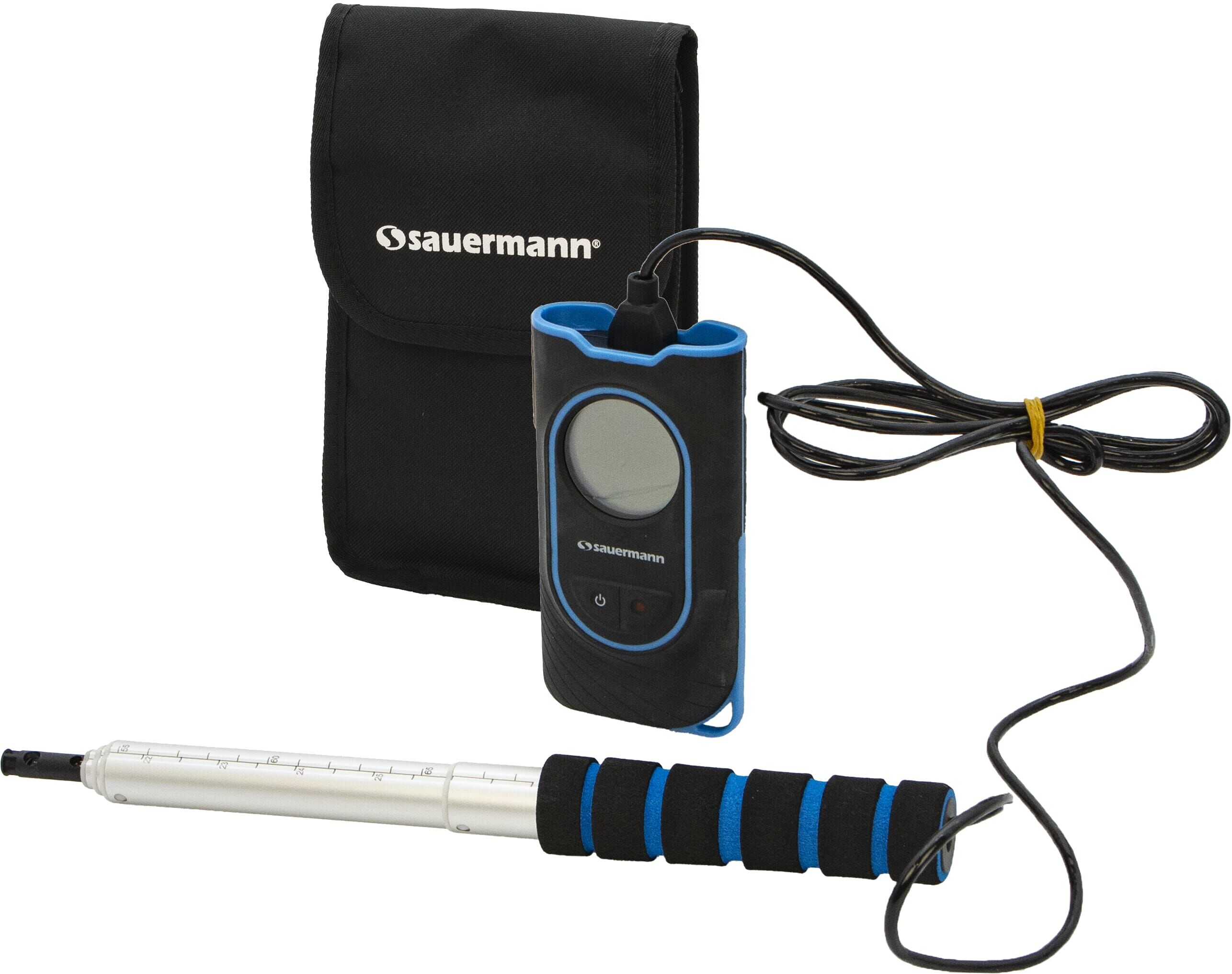
Sauermann Kimo K-Si-VH3 Hot Wire AnemometerSauermann Kimo K-Si-VH3 Hot Wire Anemometer The Sauermann Kimo K-Si-VH3 uses hot wire sensing technology to measure air velocity, airflow and temperature, with the ability to detect velocities as low as 0.00 m/s — something a vane anemometer can't do. This makes it the better choice for sensitive HVAC work involving slow-moving or near-static airflow, where a vane probe would struggle to register a reading at all. An 80cm telescopic rod with double graduation extends reach into ceiling voids, duct access points and grilles without needing a ladder or repositioning the instrument. Air velocity, airflow and temperature are all displayed together on the two-line backlit LCD, with a velocity range of 0.00 to 30.00 m/s and a temperature range of -10.00°C to 60.00°C. The IP54 rated housing copes with dusty plant rooms and damp conditions, and t110,15 £*Shipping: 0,00 £Secure redirect to the provider


-
Are all organs of the human body surrounded by blood?
No, not all organs of the human body are surrounded by blood. While blood vessels do supply most organs with oxygen and nutrients, there are some organs that do not have direct blood supply, such as the cornea of the eye and the cartilage in joints. These organs receive nutrients and oxygen through diffusion from nearby blood vessels. **
-
What kind of skeleton and blood dragons are there in Skyrim?
In Skyrim, there are two types of dragons: skeletal dragons and blood dragons. Skeletal dragons are reanimated dragon corpses that are encountered in certain areas of the game. They are typically more powerful than regular dragons and have a unique appearance with a skeletal frame. Blood dragons, on the other hand, are a type of dragon that is characterized by their red, blood-like scales. They are one of the more common types of dragons encountered in the game and are known for their aggressive nature and powerful attacks. **
-
Can organs also be affected by fibromyalgia or does it only affect the muscles?
Fibromyalgia primarily affects the muscles, causing widespread pain, tenderness, and fatigue. However, it can also affect other parts of the body, including the organs. Some people with fibromyalgia may experience symptoms such as irritable bowel syndrome, bladder issues, and headaches. Additionally, fibromyalgia has been associated with conditions like temporomandibular joint disorder and restless legs syndrome, which can impact the jaw and legs, respectively. While the exact relationship between fibromyalgia and these other symptoms is not fully understood, it is clear that the condition can have a broader impact on the body beyond just the muscles. **
-
What are the functions of organs, blood, plasma, bone marrow, and organ transport?
Organs perform specific functions within the body, such as the heart pumping blood, the lungs exchanging oxygen and carbon dioxide, and the liver filtering toxins. Blood carries oxygen, nutrients, and hormones to cells, and removes waste products. Plasma is the liquid component of blood that carries these substances. Bone marrow produces blood cells, including red blood cells, white blood cells, and platelets. Organ transport, such as the circulatory system, moves blood and other substances throughout the body to support the functions of various organs and tissues. **

Why are these organs being supplied with blood while the others are not?
The organs being supplied with blood are likely vital for immediate survival, such as the heart and brain. These organs require a constant supply of oxygen and nutrients to function properly. In a situation where blood flow is restricted, the body prioritizes these essential organs to ensure their continued function. Other organs may have reduced blood flow in order to redirect resources to the vital organs. **
What are functional organs and machine organs?
Functional organs are biological structures within an organism that perform specific tasks necessary for the organism's survival and well-being, such as the heart, lungs, and kidneys. Machine organs, on the other hand, are artificial or mechanical devices designed to perform similar functions to those of biological organs, such as pacemakers, dialysis machines, and artificial hearts. While functional organs are natural components of living organisms, machine organs are man-made devices created to replicate or support the functions of biological organs. **
Top-Angebote
Products related to Anemometer:
-
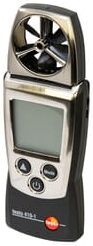
Testo 410-1 Compact Vane AnemometerExperience the convenience of the Testo 410-1 Compact Vane Anemometer, designed for quick and precise measurements in any setting. This pocket-sized tool is perfect for fast check measurements at air outlets, in outdoor environments, or wherever accurate air velocity and temperature readings are needed. Key Features: Compact and Portable: Easily fits into your pocket, making it ideal for on-the-go measurements. Versatile Measurement Range: With a range of 0.4 to 20 m/s, it's effective even at low air speeds. Integrated Vane: Features a permanently mounted 30 mm vane for integral air velocity measurement at ventilation grilles. Outdoor Suitability: Measures air velocity and temper119,40 £*Shipping: 0,00 £Secure redirect to the provider
-
Testo 410i Vane Anemometer Smart ProbeTesto 410i Vane Anemometer Smart Probe (0560 1410) The Testo 410i is a Bluetooth vane anemometer smart probe that measures air velocity, airflow and temperature, and pairs wirelessly with the free Testo Smart App on iOS or Android. Small enough to fit in a shirt pocket at 154 x 43 x 21 mm and 117.8g, it turns a smartphone into the display, data logger and reporting tool for airflow measurement work. Velocity is measured across a range of 0.4 to 30 m/s with 0.1 m/s resolution, covering both residential and commercial HVAC applications. Temperature is measured simultaneously from -20°C to +60°C with ±0.5°C accuracy, so a separate thermometer isn't needed. The instrument itself is rated for operation between -20°C and +50°C. For balancing work, the app can calculate timed or multi-point mean airflow automatically, and once outlet dimension107,10 £*Shipping: 0,00 £Secure redirect to the provider
-
Testo 416 Digital 16mm Vane AnemometerWith the compact 16 mm vane anemometer Testo 416 with telescopic probe and App connection, you can carry out flow measurements in the ventilation ducts of air conditioning and ventilation systems easily, quickly and precisely. The integrated telescope can be extended up to 850 mm, making it easier to work overhead or in large diameter ducts. To ensure that you have all the relevant information at your fingertips, the testo 416 automatically calculates time and point average values as well as the volume flow rate. And thanks to the compact design and the robust housing, the vane anemometer can also stand it if conditions get a little rougher at times. Configuration of the measuring instrument, display and storage of measured values as well as documentation are all particularly convenient with the Testo Smart App. This also turns your smartphone into a second display. The compac519,18 £*Shipping: 0,00 £Secure redirect to the provider
-
Testo 417 Vane Anemometer - Kit 1The compact Testo 417 Vane Anemometer Set 1 is designed to simplify the process of measuring airflow on air inlets, outlets, and plate outlets of air conditioning and ventilation systems. Equipped with an integrated 100 mm vane, this anemometer ensures precise results quickly. The device automatically calculates time and point average values as well as volume flow, displaying them clearly for efficient adjustment of balanced residential ventilation systems. Key Features Integrated 100 mm Vane: Delivers quick and accurate measurements. Automatic Calculations: Time and point averages, along with volume flow, are computed and displayed. Efficient Ventilation Adjustment: Ideal for balanced res468,00 £*Shipping: 0,00 £Secure redirect to the provider
-
Why do some people find blood and organs disgusting?
Some people find blood and organs disgusting due to a combination of cultural, psychological, and evolutionary factors. Culturally, there may be taboos or stigmas surrounding blood and bodily organs, leading to a learned aversion. Psychologically, the sight of blood and organs may trigger a fear response or feelings of disgust, which can be influenced by individual differences in sensitivity and past experiences. From an evolutionary perspective, disgust towards blood and organs may have developed as a way to avoid potential sources of infection or disease, as they can carry pathogens. Overall, the aversion to blood and organs can be influenced by a complex interplay of cultural, psychological, and evolutionary factors. **
-
Do Pokémon have organs like flesh or muscles like a human?
Pokémon are fictional creatures, and their anatomy is not fully explained in the Pokémon universe. However, they are often depicted as having physical bodies with flesh, muscles, and other organs similar to those of real animals. In the Pokémon games, TV shows, and movies, they are shown to have physical forms and exhibit behaviors that suggest they have internal organs and musculature. While the specifics of their anatomy may not be fully detailed, it is generally understood that Pokémon have physical bodies with similar biological components to real animals. **
-
Are all organs of the human body surrounded by blood?
No, not all organs of the human body are surrounded by blood. While blood vessels do supply most organs with oxygen and nutrients, there are some organs that do not have direct blood supply, such as the cornea of the eye and the cartilage in joints. These organs receive nutrients and oxygen through diffusion from nearby blood vessels. **
-
What kind of skeleton and blood dragons are there in Skyrim?
In Skyrim, there are two types of dragons: skeletal dragons and blood dragons. Skeletal dragons are reanimated dragon corpses that are encountered in certain areas of the game. They are typically more powerful than regular dragons and have a unique appearance with a skeletal frame. Blood dragons, on the other hand, are a type of dragon that is characterized by their red, blood-like scales. They are one of the more common types of dragons encountered in the game and are known for their aggressive nature and powerful attacks. **
Similar search terms for Anemometer
-
Testo 405i Bluetooth Thermal Anemometer Smart ProbeNo more surprises with the Testo 405i Thermal Anemometer Smart Probe. Designed for professionals, this anemometer from the Testo Smart Probes series is perfect for measuring air velocity, temperature, and volume flows in ventilation ducts. It’s also ideal for checking indoor air velocity, locating non-airtight windows, and calculating cooling capacities and heating outputs when paired with the Testo 605i thermohygrometer. Key Features: Versatile Measurements: Accurately measures air velocity, temperature, and volume flows. Indoor Air Velocity: Perfect for locating non-airtight windows and ensuring optimal indoor air quality. Cooling and Heating Calculations: Works with Testo 605i thermohygrometer for com124,28 £*Shipping: 0,00 £Secure redirect to the provider
-
Sauermann Kimo K-Si-VH3 Hot Wire AnemometerSauermann Kimo K-Si-VH3 Hot Wire Anemometer The Sauermann Kimo K-Si-VH3 uses hot wire sensing technology to measure air velocity, airflow and temperature, with the ability to detect velocities as low as 0.00 m/s — something a vane anemometer can't do. This makes it the better choice for sensitive HVAC work involving slow-moving or near-static airflow, where a vane probe would struggle to register a reading at all. An 80cm telescopic rod with double graduation extends reach into ceiling voids, duct access points and grilles without needing a ladder or repositioning the instrument. Air velocity, airflow and temperature are all displayed together on the two-line backlit LCD, with a velocity range of 0.00 to 30.00 m/s and a temperature range of -10.00°C to 60.00°C. The IP54 rated housing copes with dusty plant rooms and damp conditions, and t110,15 £*Shipping: 0,00 £Secure redirect to the provider
-
Sauermann Kimo K-Si-VV3 Rotating Vane Anemometer – HVACSauermann Kimo K-Si-VV3 - A Rotating Vane Anemometer for HVAC The Sauermann Kimo K-Si-VV3 is a rotating vane anemometer that measures air velocity, airflow and temperature simultaneously, displaying all three on a two-line backlit LCD. A 2m cable connects the vane probe to the instrument body, so it can be positioned inside ducts and ceiling diffusers without having to move or reposition the main unit. The vane covers a velocity range of 0.40 to 30.00 m/s and an airflow range of 0.00 to 9,999.00 m³/h, with a temperature range of -10.00°C to 60.00°C. The housing is IP54 rated, giving it protection against dust and water splash for use in plant rooms and other on-site conditions rather than office-only environments. Battery life is rated at 120 hours from three AAA alkaline batteries, and a magnetic backing lets it be fixed to any metal surface for63,59 £*Shipping: 5,00 £Secure redirect to the provider
-
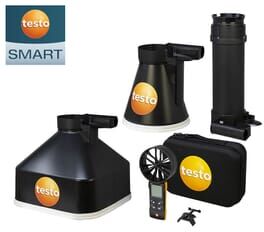
Testo 417-2 Bluetooth Digital 100mm Vane Anemometer Kit 2Testo 417 Vane Anemometer - Kit 2 with Funnels & Flow Straightener The Testo 417 Kit 2 is the complete version of the 417 vane anemometer, adding two funnel sizes and a flow straightener to the same 100mm integrated vane used in Kit 1. It's built for the full range of HVAC work — duct testing, ventilation commissioning, swirl outlets, and any application where turbulent airflow would otherwise compromise reading accuracy. The instrument itself is identical to Kit 1: the same 100mm vane, automatic time and point average calculations, Testo Smart App connectivity, and 50-hour battery life from 3 x AA batteries. The difference is in the accessories. The two funnel sizes extend the range of outlets and grilles that can be measured accurately, while the flow straightener conditions turbulent or non-uniform airflow before it reaches the vane — a re564,00 £*Shipping: 0,00 £Secure redirect to the provider
-
Can organs also be affected by fibromyalgia or does it only affect the muscles?
Fibromyalgia primarily affects the muscles, causing widespread pain, tenderness, and fatigue. However, it can also affect other parts of the body, including the organs. Some people with fibromyalgia may experience symptoms such as irritable bowel syndrome, bladder issues, and headaches. Additionally, fibromyalgia has been associated with conditions like temporomandibular joint disorder and restless legs syndrome, which can impact the jaw and legs, respectively. While the exact relationship between fibromyalgia and these other symptoms is not fully understood, it is clear that the condition can have a broader impact on the body beyond just the muscles. **
-
What are the functions of organs, blood, plasma, bone marrow, and organ transport?
Organs perform specific functions within the body, such as the heart pumping blood, the lungs exchanging oxygen and carbon dioxide, and the liver filtering toxins. Blood carries oxygen, nutrients, and hormones to cells, and removes waste products. Plasma is the liquid component of blood that carries these substances. Bone marrow produces blood cells, including red blood cells, white blood cells, and platelets. Organ transport, such as the circulatory system, moves blood and other substances throughout the body to support the functions of various organs and tissues. **
-
Why are these organs being supplied with blood while the others are not?
The organs being supplied with blood are likely vital for immediate survival, such as the heart and brain. These organs require a constant supply of oxygen and nutrients to function properly. In a situation where blood flow is restricted, the body prioritizes these essential organs to ensure their continued function. Other organs may have reduced blood flow in order to redirect resources to the vital organs. **
-
What are functional organs and machine organs?
Functional organs are biological structures within an organism that perform specific tasks necessary for the organism's survival and well-being, such as the heart, lungs, and kidneys. Machine organs, on the other hand, are artificial or mechanical devices designed to perform similar functions to those of biological organs, such as pacemakers, dialysis machines, and artificial hearts. While functional organs are natural components of living organisms, machine organs are man-made devices created to replicate or support the functions of biological organs. **
* All prices are inclusive of VAT and, if applicable, plus shipping costs. The offer information is based on the details provided by the respective shop and is updated through automated processes. Real-time updates do not occur, so deviations can occur in individual cases. ** Note: Parts of this content were created by AI.