Buy anatomy46.eu ?
We are moving the project
anatomy46.eu .
Are you interested in purchasing the domain
anatomy46.eu ?
domain@kv-gmbh.de · 0541-91531010
Buy anatomy46.eu ?
How can one cut a bearing, if one has a two-way bearing without bearing force?
If one has a two-way bearing without bearing force, it can be cut by using a cutting tool such as a saw or a grinder. The cutting tool should be used to carefully cut through the outer ring of the bearing, being cautious not to damage the inner components. It is important to wear protective gear and work in a well-ventilated area when cutting a bearing to ensure safety. Additionally, it may be helpful to seek guidance from a professional or refer to the manufacturer's instructions for specific guidance on cutting the particular type of bearing. **
How do you reinstall a hub bearing or ball bearing?
To reinstall a hub bearing or ball bearing, you will need to first clean the bearing housing and apply a thin layer of grease to the inside of the housing. Next, carefully place the bearing back into the housing, making sure it is properly aligned. Use a bearing press or a socket and hammer to gently tap the bearing into place until it is fully seated. Finally, reassemble the rest of the components in the correct order and torque the axle nut to the manufacturer's specifications. **
Similar search terms for Bearing
Top-Angebote
Products related to Bearing:
-
SIDEM 9084 Bearing, wheel bearing housingFitting Position: Rear Axle both sides, Upper; Height: 54; Inner Diameter [mm]: 14,2; Outer Diameter [mm]: 47,3; article number of the recommended special tool: R10082; Supplementary Article / Supplementary Info Info 2: Requires special tools for mounting15,99 £*Shipping: 8,45 £Secure redirect to the provider


-
Is it a load-bearing or non-load-bearing wall?
Without further information or context, it is impossible to determine if the wall in question is load-bearing or non-load-bearing. Load-bearing walls are designed to support the weight of a structure, while non-load-bearing walls are primarily used for dividing spaces and do not support structural weight. It is important to consult a structural engineer or building professional to assess the specific characteristics of the wall in question to determine its load-bearing capacity. **
-
What causes bearing damage?
Bearing damage can be caused by a variety of factors, including improper lubrication, contamination from dirt or debris, misalignment, overloading, or excessive heat. Lack of maintenance, poor installation practices, and using the wrong type of bearing for the application can also contribute to bearing damage. It is important to regularly inspect and maintain bearings to prevent damage and ensure optimal performance. **
-
Live-bearing fish species
Live-bearing fish species are a type of fish that give birth to live young instead of laying eggs. This reproductive strategy is common among fish such as guppies, mollies, and swordtails. Live-bearing fish are popular among aquarium hobbyists due to their interesting breeding behaviors and the ability to observe the development of the young fish. This reproductive strategy allows the offspring to have a higher chance of survival compared to species that lay eggs, as the young are born fully developed and able to swim and feed on their own. **
-
What is a bearing?
A bearing is a mechanical component that allows for smooth rotation or movement between two parts. It is typically a round metal component that reduces friction and helps support the load of the rotating or moving parts. Bearings are commonly used in various machines and equipment, such as vehicles, industrial machinery, and household appliances, to facilitate smooth and efficient operation. **
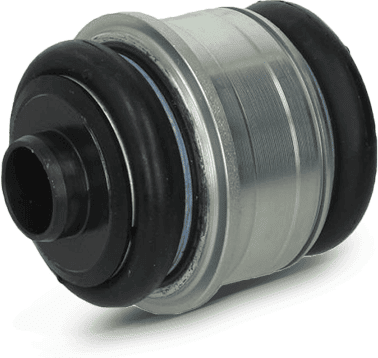

Should one use an industrial bearing or a cone bearing for a bicycle?
For a bicycle, it is generally recommended to use cone bearings. Cone bearings are more commonly used in bicycle hubs and bottom brackets because they are easier to adjust and maintain. They also provide a smoother and more efficient rotation for the wheels and pedals. Industrial bearings, on the other hand, are designed for heavier loads and higher speeds, which are not typically necessary for a bicycle application. Therefore, cone bearings are the more suitable choice for a bicycle. **
'How do I recognize a load-bearing and a non-load-bearing wall?'
Load-bearing walls are typically located in the center of a building or perpendicular to the floor joists. They are usually made of thicker, stronger materials such as concrete, brick, or solid wood. Non-load-bearing walls, on the other hand, are often located on the perimeter of a building and are made of lighter materials such as drywall or wood studs. Additionally, load-bearing walls are essential for the structural integrity of a building, while non-load-bearing walls are primarily used for dividing space and can be removed without compromising the building's stability. If you are unsure, it is best to consult with a structural engineer or building professional to determine the load-bearing status of a wall. **
Top-Angebote
Products related to Bearing:
-
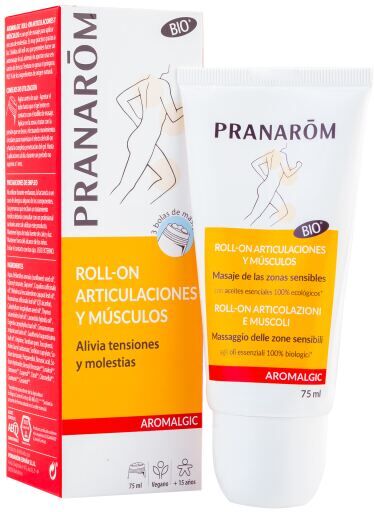
Pranarom Aromalgic Roll On Joints and Muscles 75 ml 75 mlHealth and Beauty First aid kit Pranarom Aromalgic Roll On Joints and Muscles 75 ml 75 ml What is Pranarom Aromalgic Roll On Joints and Muscles 75 ml? Pranarom Aromalgic Roll-On Joints and Muscles 75 ml is a natural treatment based on 100% pure and natural essential oils, designed to provide immediate and long-lasting relief to joints and muscles . Its roll-on format allows for precise, easy application without getting your hands dirty, ideal for use at any time of day. This product combines the soothing properties of essential oils such as eucalyptus, peppermint, clove, and wintergreen, all known for their benefits in treating muscle and joint pain. It is an effective option for those seeking natural relief without resorting to conventional pharmaceuticals. Who is it for? Pranarom Aromalgic Roll On Joints and Muscles 75 ml is indicated for: People with occasional or chronic joint pain. Athletes who need relief from muscle discomfort after exercise. Individuals who suffer from muscle tension due to stress or poor posture. Older adults with joint stiffness or discomfort. People who prefer natural solutions based on scientific aromatherapy. How do I apply it? Using Pranarom Aromalgic Roll On Joints and Muscles 75 ml is very simple thanks to its practical roll-on format: Shake before use to activate all ingredients. Apply directly to the affected area (shoulders, knees, neck, back, etc.). Glide the roll-on in a circular motion for a few seconds. Massage with your hands is not necessary, but you can do so if desired to increase product penetration. Use up to 3 times a day as needed. Product use Pranarom Aromalgic Roll-On Joints and Muscles 75 ml acts quickly and effectively to promote well-being and mobility , offering an immediate sensation of freshness followed by a comforting effect. Its notable uses include: **Relieve joint pain** caused by arthritis, osteoarthritis, or overload. **Reduce muscle tension** caused by stress, poor posture, or physical exertion. **Facilitate post-workout recovery**, ideal for athletes and active people. **Reduce morning stiffness** in older people or those with limited mobility. **Natural alternative to traditional topical pain relievers**, without harsh chemicals or systemic side effects. Thanks to its composition, rich in biochemically defined essential oils, this roll-on not only targets pain but also improves local circulation and promotes muscle tissue regeneration. Plus, its compact size makes it perfect for carrying in your purse, gym bag, or even in the car. Buy Pranarom Aromalgic Roll On Joints and Muscles 75 ml If you're looking for an effective, natural, and convenient solution to relieve your muscle and joint pain, Pranarom Aromalgic Roll-On Joints and Muscles 75 ml is your best choice. It provides fast relief thanks to the synergistic action of essential oils, in a convenient, portable format that adapts to your lifestyle. Place your order today and discover the benefits of aromatherapy applied to muscle...13,61 £*Shipping: 3,99 £Secure redirect to the provider
-
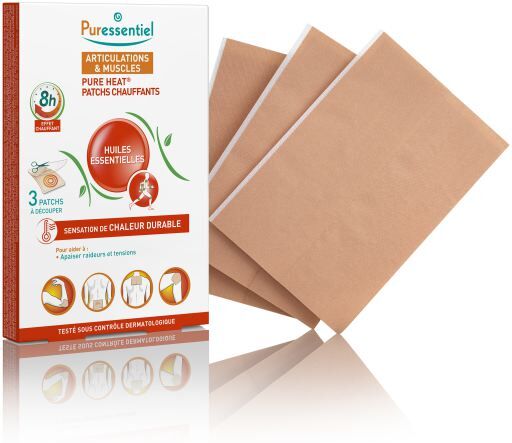
Puressentiel Pure Heat Heat Patches for Joints and Muscles, 3 pcsHealth and Beauty First aid kit Puressentiel Pure Heat Heat Patches for Joints and Muscles, 3 pcs Heating patches for muscles and joints help relax and relieve muscle tension. Its formula based on 100% natural ingredients, combining 14 essential oils and Capsicum, provides a pleasant sensation of heat for 8 hours, which promotes muscle relaxation. The flexible patch adapts to all movements. Heating patches for muscles and joints help relax and relieve muscle tension. Its formula is made from 100% natural ingredients, combining 14 essential oils (Cajeput, Roman Chamomile, Clove, Eucalyptus, Eastern Berry, Juniper, Lavandin, Marjoram, Mint, Niaouli, Nutmeg, Pine, Rosemary, Turpentine) and Capsicum. It provides a pleasant sensation of heat for 8 hours, which promotes muscle relaxation. The flexible patch adapts to all movements, is odorless, and can be cut to the desired size and applied directly to the following body areas: back, knees, neck, shoulders, elbows, wrists, thighs, calves. Directions: The patch should be applied to healthy, dry, non-greasy skin. It should not be applied to wounds, sensitive skin, the face, irritated skin, or mucous membranes, especially after waxing or shaving. Avoid applying it to areas of the body that may be constricted (tight clothing, the inner fold of the elbow, behind the knee, etc.). The patch produces a warming sensation, the intensity and duration of which varies depending on the individual's reaction. If you feel a burning sensation, develop a skin irritation, or develop an allergy, remove the patch immediately. Do not use it for more than 8 hours. Warnings: Not recommended for children under 15 years of age, pregnant or breastfeeding women, or people with a history of seizures or epileptic attacks. Do not use if you are allergic to salicylates or any of the ingredients. Keep out of reach of children.13,06 £*Shipping: 3,99 £Secure redirect to the provider
-
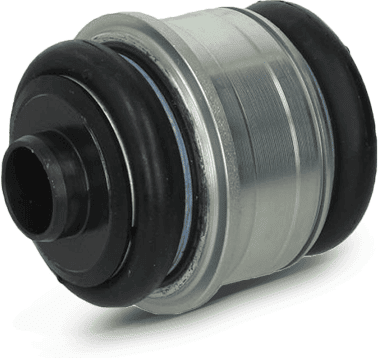
SIDEM 9084 Bearing, wheel bearing housingFitting Position: Rear Axle both sides, Upper; Height: 54; Inner Diameter [mm]: 14,2; Outer Diameter [mm]: 47,3; article number of the recommended special tool: R10082; Supplementary Article / Supplementary Info Info 2: Requires special tools for mounting15,99 £*Shipping: 8,45 £Secure redirect to the provider
-
How can one cut a bearing, if one has a two-way bearing without bearing force?
If one has a two-way bearing without bearing force, it can be cut by using a cutting tool such as a saw or a grinder. The cutting tool should be used to carefully cut through the outer ring of the bearing, being cautious not to damage the inner components. It is important to wear protective gear and work in a well-ventilated area when cutting a bearing to ensure safety. Additionally, it may be helpful to seek guidance from a professional or refer to the manufacturer's instructions for specific guidance on cutting the particular type of bearing. **
-
How do you reinstall a hub bearing or ball bearing?
To reinstall a hub bearing or ball bearing, you will need to first clean the bearing housing and apply a thin layer of grease to the inside of the housing. Next, carefully place the bearing back into the housing, making sure it is properly aligned. Use a bearing press or a socket and hammer to gently tap the bearing into place until it is fully seated. Finally, reassemble the rest of the components in the correct order and torque the axle nut to the manufacturer's specifications. **
-
Is it a load-bearing or non-load-bearing wall?
Without further information or context, it is impossible to determine if the wall in question is load-bearing or non-load-bearing. Load-bearing walls are designed to support the weight of a structure, while non-load-bearing walls are primarily used for dividing spaces and do not support structural weight. It is important to consult a structural engineer or building professional to assess the specific characteristics of the wall in question to determine its load-bearing capacity. **
-
What causes bearing damage?
Bearing damage can be caused by a variety of factors, including improper lubrication, contamination from dirt or debris, misalignment, overloading, or excessive heat. Lack of maintenance, poor installation practices, and using the wrong type of bearing for the application can also contribute to bearing damage. It is important to regularly inspect and maintain bearings to prevent damage and ensure optimal performance. **
Similar search terms for Bearing
-
METZGER 52103709 Bearing, wheel bearing housingFitting Position: Rear Axle Left, Rear Axle Right, outer, Lower; Inner Diameter [mm]: 12; Outer Diameter [mm]: 37,4; Height: 50; Mounting Type: Rubber-Metal Mount; Guarantee: 3 years guarantee or up to 75,000km; for PR number: 0N48,29 £*Shipping: 8,45 £Secure redirect to the provider
-
Live-bearing fish species
Live-bearing fish species are a type of fish that give birth to live young instead of laying eggs. This reproductive strategy is common among fish such as guppies, mollies, and swordtails. Live-bearing fish are popular among aquarium hobbyists due to their interesting breeding behaviors and the ability to observe the development of the young fish. This reproductive strategy allows the offspring to have a higher chance of survival compared to species that lay eggs, as the young are born fully developed and able to swim and feed on their own. **
-
What is a bearing?
A bearing is a mechanical component that allows for smooth rotation or movement between two parts. It is typically a round metal component that reduces friction and helps support the load of the rotating or moving parts. Bearings are commonly used in various machines and equipment, such as vehicles, industrial machinery, and household appliances, to facilitate smooth and efficient operation. **
-
Should one use an industrial bearing or a cone bearing for a bicycle?
For a bicycle, it is generally recommended to use cone bearings. Cone bearings are more commonly used in bicycle hubs and bottom brackets because they are easier to adjust and maintain. They also provide a smoother and more efficient rotation for the wheels and pedals. Industrial bearings, on the other hand, are designed for heavier loads and higher speeds, which are not typically necessary for a bicycle application. Therefore, cone bearings are the more suitable choice for a bicycle. **
-
'How do I recognize a load-bearing and a non-load-bearing wall?'
Load-bearing walls are typically located in the center of a building or perpendicular to the floor joists. They are usually made of thicker, stronger materials such as concrete, brick, or solid wood. Non-load-bearing walls, on the other hand, are often located on the perimeter of a building and are made of lighter materials such as drywall or wood studs. Additionally, load-bearing walls are essential for the structural integrity of a building, while non-load-bearing walls are primarily used for dividing space and can be removed without compromising the building's stability. If you are unsure, it is best to consult with a structural engineer or building professional to determine the load-bearing status of a wall. **
* All prices are inclusive of VAT and, if applicable, plus shipping costs. The offer information is based on the details provided by the respective shop and is updated through automated processes. Real-time updates do not occur, so deviations can occur in individual cases. ** Note: Parts of this content were created by AI.