Buy anatomy46.eu ?
We are moving the project
anatomy46.eu .
Are you interested in purchasing the domain
anatomy46.eu ?
domain@kv-gmbh.de · 0541-91531010
Buy anatomy46.eu ?
Why do some people find blood and organs disgusting?
Some people find blood and organs disgusting due to a combination of cultural, psychological, and evolutionary factors. Culturally, there may be taboos or stigmas surrounding blood and bodily organs, leading to a learned aversion. Psychologically, the sight of blood and organs may trigger a fear response or feelings of disgust, which can be influenced by individual differences in sensitivity and past experiences. From an evolutionary perspective, disgust towards blood and organs may have developed as a way to avoid potential sources of infection or disease, as they can carry pathogens. Overall, the aversion to blood and organs can be influenced by a complex interplay of cultural, psychological, and evolutionary factors. **
Do Pokémon have organs like flesh or muscles like a human?
Pokémon are fictional creatures, and their anatomy is not fully explained in the Pokémon universe. However, they are often depicted as having physical bodies with flesh, muscles, and other organs similar to those of real animals. In the Pokémon games, TV shows, and movies, they are shown to have physical forms and exhibit behaviors that suggest they have internal organs and musculature. While the specifics of their anatomy may not be fully detailed, it is generally understood that Pokémon have physical bodies with similar biological components to real animals. **

Similar search terms for Amarone-Conte-Gastone-Massimago
Top-Angebote
Products related to Amarone-Conte-Gastone-Massimago:
-
HealthAid Gastone Activated Charcoal 260 mg 60 CapsulesNutrition and Supplements Digestive enzymes and fibers HealthAid Gastone Activated Charcoal 260 mg 60 Capsules Gastone capsules contain charcoal that helps absorb and neutralize gas created by indigestion and food fermentation in the stomach and intestinal tract. Activated charcoal is a safe natural internal cleanser and deodorizer that is beneficial for aiding and maintaining intestinal hygiene and therefore fresh breath. Gastone capsules are specially manufactured with charcoal made from a natural organic source and then activated to ensure it absorbs three to four times more gas than ordinary charcoal. Gastone Capsules may be beneficial for; Those who are prone to common bacterial, viral, and fungal infections Those who experience indigestion People who want to detoxify their body16,26 £*Shipping: 3,99 £Secure redirect to the provider
-
Chardonnay 'Conte Hugues' Rapitalà 2024The Chardonnay “Conte Hugues” from the Rapitalà winery is a Sicilian white wine inspired by the great models of Burgundy. Its name comes from the history of the Rapitalà brand, which was founded in 1968 when a French navy officer, Hugues Bernard, married the Palermitan Gigi Guarrasi. Together they founded a winery that from the very beginning aimed to blend Mediterranean and French cultures. It is an ideal label for those who love soft and enveloping tasting Chardonnays, expressing notes of yellow fruit, tropical fruit, vanilla, and elegant tertiary hints. It is a label with a gastronomic vocation, particularly suitable for accompanying important menus based on fish or delicate white meat dishes. The “Conte Hugues” Rapitalà is one of the flagship wines of this historic winery in the northwestern area of the island. The vineyards are located in the beautiful hilly area of Camporeale, at an altitude of about 450 meters above sea level, on clay-sandy soils, very suited for the cultivation of white grape varieties. The climate is Mediterranean, very breezy and characterized by good temperature excursions between day and night. The best Chardonnay bunches are selected directly in the vineyard and gently pressed. The free-run must ferments in temperature-controlled stainless steel tanks. Before bottling, the wine matures for 10 months in French oak barriques. The Chardonnay “Conte Hugues” Bernard de la Gatinais from the Rapitalà winery is born from the vinification of rich and ripe grapes, with very intense aromas. The choice to follow the style and customs of Burgundy leads to the creation of a wine with an international profile, suitable for those who prefer harmonious and warm expressions of Chardonnay. Its golden, bright, and luminous face already anticipates the broad and expressive character of the bouquet, which recalls orange blossom, candied citrus peel, yellow-fleshed fruit, pineapple, banana, tropical hints, soft spice nuances, and vanilla. Deep, evolved, and persistent, it opens to a long and complex sip, which leads to a very balanced finish. A Mediterranean Chardonnay of great charm.28,00 £*Shipping: 48,00 £Secure redirect to the provider
-
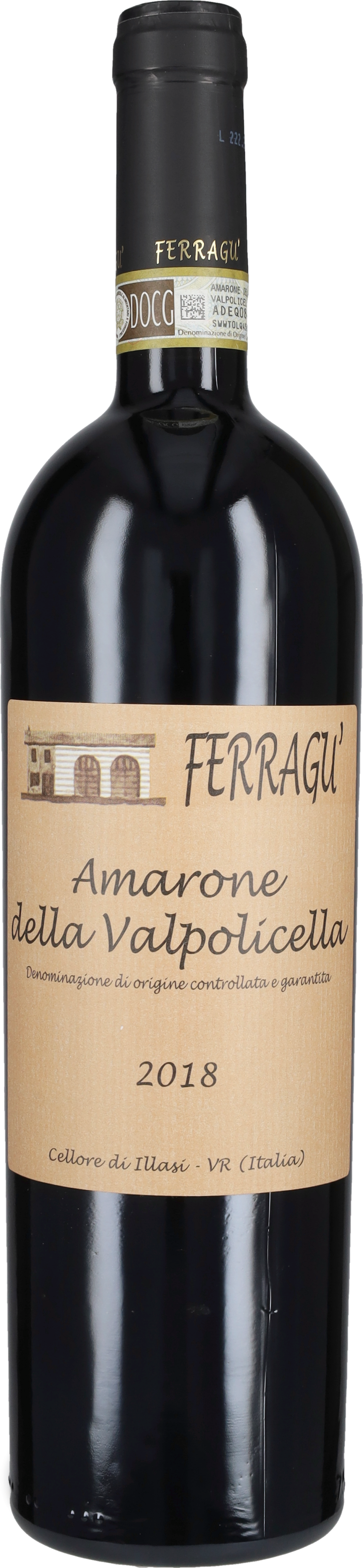
Amarone Ferragù 2018L’Amarone della Valpolicella della cantina Ferragù è un vino dal futuro radioso, capace di affinare per lunghissimo tempo, se ben conservato in cantina. Si tratta dunque di un ottimo investimento per il futuro. Elegante, forte e preciso al contempo, risulta ben delineato in ogni sua componente organolettica, tanto nei sentori varietali e primari, quanto in quelli secondari e terziari, derivanti dal lungo affinamento trascorso prima in legno e poi in vetro. Un’etichetta importante, da condividere con gli appassionati di grandi vini rossi italiani. Questo Amarone prende vita da un sapiente blend di vitigni autoctoni a bacca rossa, assemblati fra loro da Ferragù: Corvina, Corvinone, Rondinella e Oseleta. Le viti di queste quattro varietà hanno un’età media di 55 anni, e affondano le radici all’interno di un sottosuolo caratterizzato da un terreno di medio impasto, in vigneti situati a circa 240 metri sul livello del mare. Le uve, una volta selezionate e raccolte dal team della cantina, vengono fatte appassire per 70 giorni, al termine dei quali vengono pigiate, diraspate e fermentate in contenitori d’acciaio. Segue poi l’importante fase di maturazione, in cui il vino rimane dapprima per 36 mesi in barrique di rovere americano, e poi, dopo l’imbottigliamento, per ulteriori 12 mesi in vetro. L’Amarone della Valpolicella di Ferragù si manifesta all’occhio con un colore intenso e concentrato, che richiama le sfumature del rosso rubino. Lo spettro olfattivo è ricco e stratificato, con note complesse che, dalla confettura di frutta, virano verso le spezie e le sfumature tostate. Al palato è di grande struttura, possente e muscolare, con un sorso che riscalda grazie anche a una trama tannica molto fasciante. Quando si stappa una bottiglia di questo livello, la felicità è davvero a portata di calice: assolutamente da provare!83,00 £*Shipping: 48,00 £Secure redirect to the provider
-
Amarone Classico Bertani 2012Bertani's Amarone Classico encapsulates the charm of time gone by and is able to tell the story of an entire territory, Valpolicella, which has always been an oenological pearl in Italy and the world. An expression of recent tradition, but at the same time a symbol of this fascinating corner of Italy, a wine that has required decades of refinement and discovery to arrive at the quality profile it can offer today. It is one of the most appreciated and most famous interpretations of the entire denomination and among the greatest expressions of the entire world wine scene. Elegance, softness and envelopment are brought to a very high level to guarantee an indelible and unforgettable sip that touches the deepest chords of the soul. Myth, legend and crystal-clear talent! Bertani Amarone is the result of painstaking and carefully studied work, the fruit of a long tradition handed down from generation to generation. It all starts in the vineyard, with a careful selection of bunches from the Tenuta Novare vineyards in Arbizzano di Negrar that rest on marl-calcareous soils with the classic Guyot training system. The grapes, Corvina and Rondinella, are left to dry for a long time, for about 120 days, in a completely natural way in the estate's fruit cellars. They are then fermented, in the middle of winter, very slowly, guaranteeing a long maturation that brings it to such a balance as to guarantee it a truly astonishing longevity, even several decades! This is followed by a slow fermentation in cement for 50 days, of which 20 days of maceration on the skins, and ageing for about six years in Slavonian oak casks, with subsequent stabilisation in the bottle for a further 12 months. Bertani Amarone Classico tells a story of passion, tradition and love for its land. It descends into the glass with a dark, slightly transparent garnet red colour with orange hues. The bouquet is intense and complex where typical notes of plum, cherry and morello cherry alternate with dried fruit, liquorice and spices. A balsamic cloud closes a decidedly broad and rich nose. In the mouth it is soft and seductive, warm and powerful, full and persistent, endowed with a sweet tannin and a balsamic freshness that allow it to keep for a long time and express itself at its best after a few years of bottle ageing. The symbol of Valpolicella.112,00 £*Shipping: 48,00 £Secure redirect to the provider



-
Are all organs of the human body surrounded by blood?
No, not all organs of the human body are surrounded by blood. While blood vessels do supply most organs with oxygen and nutrients, there are some organs that do not have direct blood supply, such as the cornea of the eye and the cartilage in joints. These organs receive nutrients and oxygen through diffusion from nearby blood vessels. **
-
What kind of skeleton and blood dragons are there in Skyrim?
In Skyrim, there are two types of dragons: skeletal dragons and blood dragons. Skeletal dragons are reanimated dragon corpses that are encountered in certain areas of the game. They are typically more powerful than regular dragons and have a unique appearance with a skeletal frame. Blood dragons, on the other hand, are a type of dragon that is characterized by their red, blood-like scales. They are one of the more common types of dragons encountered in the game and are known for their aggressive nature and powerful attacks. **
-
Can organs also be affected by fibromyalgia or does it only affect the muscles?
Fibromyalgia primarily affects the muscles, causing widespread pain, tenderness, and fatigue. However, it can also affect other parts of the body, including the organs. Some people with fibromyalgia may experience symptoms such as irritable bowel syndrome, bladder issues, and headaches. Additionally, fibromyalgia has been associated with conditions like temporomandibular joint disorder and restless legs syndrome, which can impact the jaw and legs, respectively. While the exact relationship between fibromyalgia and these other symptoms is not fully understood, it is clear that the condition can have a broader impact on the body beyond just the muscles. **
-
What are the functions of organs, blood, plasma, bone marrow, and organ transport?
Organs perform specific functions within the body, such as the heart pumping blood, the lungs exchanging oxygen and carbon dioxide, and the liver filtering toxins. Blood carries oxygen, nutrients, and hormones to cells, and removes waste products. Plasma is the liquid component of blood that carries these substances. Bone marrow produces blood cells, including red blood cells, white blood cells, and platelets. Organ transport, such as the circulatory system, moves blood and other substances throughout the body to support the functions of various organs and tissues. **

Why are these organs being supplied with blood while the others are not?
The organs being supplied with blood are likely vital for immediate survival, such as the heart and brain. These organs require a constant supply of oxygen and nutrients to function properly. In a situation where blood flow is restricted, the body prioritizes these essential organs to ensure their continued function. Other organs may have reduced blood flow in order to redirect resources to the vital organs. **
What are functional organs and machine organs?
Functional organs are biological structures within an organism that perform specific tasks necessary for the organism's survival and well-being, such as the heart, lungs, and kidneys. Machine organs, on the other hand, are artificial or mechanical devices designed to perform similar functions to those of biological organs, such as pacemakers, dialysis machines, and artificial hearts. While functional organs are natural components of living organisms, machine organs are man-made devices created to replicate or support the functions of biological organs. **
Top-Angebote
Products related to Amarone-Conte-Gastone-Massimago:
-
Amarone 'Conte Gastone' Massimago 2021Amarone "Conte Gastone" by Massimago is a wine that, at times, seems timeless. The intrinsic elegance that is felt with every sip transports us to a new dimension, where the crispness of dried fruit on the nose combines with the thickness of a warm and decisive sip, in a harmony of sensations that, while retracing the classicism of tradition, appear new and more seductive. A label that is born from the hands of the young Camilla Rossi Chauvenet, who deserves praise for having shaped a label that deserves space in the cellars of all enthusiasts of great Italian reds. The "Conte Gastone" by Massimago is an Amarone that comes from the classic triptych of indigenous Venetian grape varieties, namely Corvina, Corvinone, and Rondinella. The vines grow using the guyot system in the vineyards of the municipality of Mezzane di Sotto at about 180 meters above sea level, sinking their roots into a terroir mainly composed of marls and clays. The bunches, after harvesting, are dried for 3 months in a fruit drying room, and then cold macerated for 5 days; the the subsequent alcoholic fermentation takes place in steel tanks. The final aging phase lasts a total of 24 months in barriques and tonneaux of French oak. “Conte Gastone” Amarone by Massimago presents itself visually with a dark and impenetrable ruby color, characterized by some more garnet reflections visible especially when tilting the glass and focusing attention on the rim that is traced. The nose is teeming with references to dried fruit, while in the background a variegated carpet of more spicy references unfolds. Generous on the palate, it has a muscular body that develops with balance, highlighting a particularly tasty savory vein. A bottle in which the Amarone manages to suddenly seem like a "simple" and deeply empathetic wine, made to enjoy moments of tranquility during the evening.43,00 £*Shipping: 48,00 £Secure redirect to the provider
-
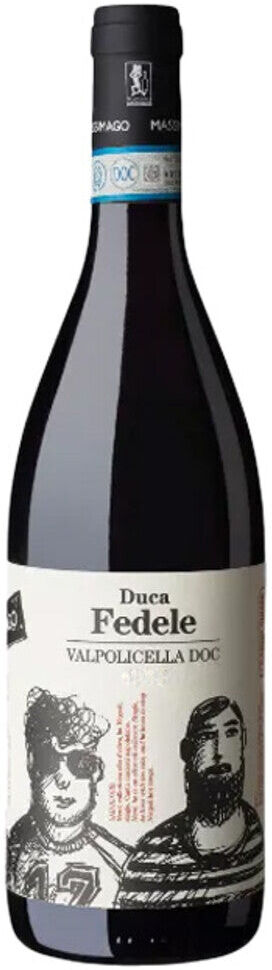
Valpolicella 'Duca Fedele' Massimago 2025The Valpolicella ‘Duca Fedele’ represents a soft and juicy expression of the Valpolicella territory, crafted by the organic estate Massimago. This winery in the province of Verona is located in Mezzane di Sotto, in the eastern area of Valpolicella, where the owner Camilla Rossi-Chauvenet continues the family winemaking tradition, which has reached its fourth generation with her. The estate's name derives from the Latin “maximum agium”, a term that originated from the fact that the area was known for its beauty and natural water sources since Roman times. The Valpolicella ‘Duca Fedele’ from Massimago consists of a blend of the traditional grape varieties Corvina Veronese (65%), Corvinone (25%), and Rondinella (10%), grown under certified organic conditions in vineyards characterized by a southwest exposure. After the harvest, the grapes undergo red winemaking through alcoholic fermentation in stainless steel tanks and a brief maceration on the skins. The subsequent maturation period, which lasts for 6 months, also takes place in steel and the wine is finally bottled and marketed after a further brief period of resting in glass. ‘Duca Fedele’ Massimago Valpolicella has a vibrant ruby red color. On the nose, it reveals crisp notes of red cherry, berries, rose petals, and aromatic herbs, enriched by hints of white pepper and pleasant vegetal notes. On the palate, it is fresh and dynamic, very fragrant and easy to drink, with a fine tannic structure accompanying the juicy fruity finish. The producer himself recommends pairing the Valpolicella ‘Duca Fedele’ with a meat tartare or with aged cheeses like Monte Veronese, a delicious cheese made from cow's milk produced in the northern part of the province of Verona.15,00 £*Shipping: 48,00 £Secure redirect to the provider
-
HealthAid Gastone Activated Charcoal 260 mg 60 CapsulesNutrition and Supplements Digestive enzymes and fibers HealthAid Gastone Activated Charcoal 260 mg 60 Capsules Gastone capsules contain charcoal that helps absorb and neutralize gas created by indigestion and food fermentation in the stomach and intestinal tract. Activated charcoal is a safe natural internal cleanser and deodorizer that is beneficial for aiding and maintaining intestinal hygiene and therefore fresh breath. Gastone capsules are specially manufactured with charcoal made from a natural organic source and then activated to ensure it absorbs three to four times more gas than ordinary charcoal. Gastone Capsules may be beneficial for; Those who are prone to common bacterial, viral, and fungal infections Those who experience indigestion People who want to detoxify their body16,26 £*Shipping: 3,99 £Secure redirect to the provider
-
Chardonnay 'Conte Hugues' Rapitalà 2024The Chardonnay “Conte Hugues” from the Rapitalà winery is a Sicilian white wine inspired by the great models of Burgundy. Its name comes from the history of the Rapitalà brand, which was founded in 1968 when a French navy officer, Hugues Bernard, married the Palermitan Gigi Guarrasi. Together they founded a winery that from the very beginning aimed to blend Mediterranean and French cultures. It is an ideal label for those who love soft and enveloping tasting Chardonnays, expressing notes of yellow fruit, tropical fruit, vanilla, and elegant tertiary hints. It is a label with a gastronomic vocation, particularly suitable for accompanying important menus based on fish or delicate white meat dishes. The “Conte Hugues” Rapitalà is one of the flagship wines of this historic winery in the northwestern area of the island. The vineyards are located in the beautiful hilly area of Camporeale, at an altitude of about 450 meters above sea level, on clay-sandy soils, very suited for the cultivation of white grape varieties. The climate is Mediterranean, very breezy and characterized by good temperature excursions between day and night. The best Chardonnay bunches are selected directly in the vineyard and gently pressed. The free-run must ferments in temperature-controlled stainless steel tanks. Before bottling, the wine matures for 10 months in French oak barriques. The Chardonnay “Conte Hugues” Bernard de la Gatinais from the Rapitalà winery is born from the vinification of rich and ripe grapes, with very intense aromas. The choice to follow the style and customs of Burgundy leads to the creation of a wine with an international profile, suitable for those who prefer harmonious and warm expressions of Chardonnay. Its golden, bright, and luminous face already anticipates the broad and expressive character of the bouquet, which recalls orange blossom, candied citrus peel, yellow-fleshed fruit, pineapple, banana, tropical hints, soft spice nuances, and vanilla. Deep, evolved, and persistent, it opens to a long and complex sip, which leads to a very balanced finish. A Mediterranean Chardonnay of great charm.28,00 £*Shipping: 48,00 £Secure redirect to the provider
-
Why do some people find blood and organs disgusting?
Some people find blood and organs disgusting due to a combination of cultural, psychological, and evolutionary factors. Culturally, there may be taboos or stigmas surrounding blood and bodily organs, leading to a learned aversion. Psychologically, the sight of blood and organs may trigger a fear response or feelings of disgust, which can be influenced by individual differences in sensitivity and past experiences. From an evolutionary perspective, disgust towards blood and organs may have developed as a way to avoid potential sources of infection or disease, as they can carry pathogens. Overall, the aversion to blood and organs can be influenced by a complex interplay of cultural, psychological, and evolutionary factors. **
-
Do Pokémon have organs like flesh or muscles like a human?
Pokémon are fictional creatures, and their anatomy is not fully explained in the Pokémon universe. However, they are often depicted as having physical bodies with flesh, muscles, and other organs similar to those of real animals. In the Pokémon games, TV shows, and movies, they are shown to have physical forms and exhibit behaviors that suggest they have internal organs and musculature. While the specifics of their anatomy may not be fully detailed, it is generally understood that Pokémon have physical bodies with similar biological components to real animals. **
-
Are all organs of the human body surrounded by blood?
No, not all organs of the human body are surrounded by blood. While blood vessels do supply most organs with oxygen and nutrients, there are some organs that do not have direct blood supply, such as the cornea of the eye and the cartilage in joints. These organs receive nutrients and oxygen through diffusion from nearby blood vessels. **
-
What kind of skeleton and blood dragons are there in Skyrim?
In Skyrim, there are two types of dragons: skeletal dragons and blood dragons. Skeletal dragons are reanimated dragon corpses that are encountered in certain areas of the game. They are typically more powerful than regular dragons and have a unique appearance with a skeletal frame. Blood dragons, on the other hand, are a type of dragon that is characterized by their red, blood-like scales. They are one of the more common types of dragons encountered in the game and are known for their aggressive nature and powerful attacks. **
Similar search terms for Amarone-Conte-Gastone-Massimago
-
Amarone Ferragù 2018L’Amarone della Valpolicella della cantina Ferragù è un vino dal futuro radioso, capace di affinare per lunghissimo tempo, se ben conservato in cantina. Si tratta dunque di un ottimo investimento per il futuro. Elegante, forte e preciso al contempo, risulta ben delineato in ogni sua componente organolettica, tanto nei sentori varietali e primari, quanto in quelli secondari e terziari, derivanti dal lungo affinamento trascorso prima in legno e poi in vetro. Un’etichetta importante, da condividere con gli appassionati di grandi vini rossi italiani. Questo Amarone prende vita da un sapiente blend di vitigni autoctoni a bacca rossa, assemblati fra loro da Ferragù: Corvina, Corvinone, Rondinella e Oseleta. Le viti di queste quattro varietà hanno un’età media di 55 anni, e affondano le radici all’interno di un sottosuolo caratterizzato da un terreno di medio impasto, in vigneti situati a circa 240 metri sul livello del mare. Le uve, una volta selezionate e raccolte dal team della cantina, vengono fatte appassire per 70 giorni, al termine dei quali vengono pigiate, diraspate e fermentate in contenitori d’acciaio. Segue poi l’importante fase di maturazione, in cui il vino rimane dapprima per 36 mesi in barrique di rovere americano, e poi, dopo l’imbottigliamento, per ulteriori 12 mesi in vetro. L’Amarone della Valpolicella di Ferragù si manifesta all’occhio con un colore intenso e concentrato, che richiama le sfumature del rosso rubino. Lo spettro olfattivo è ricco e stratificato, con note complesse che, dalla confettura di frutta, virano verso le spezie e le sfumature tostate. Al palato è di grande struttura, possente e muscolare, con un sorso che riscalda grazie anche a una trama tannica molto fasciante. Quando si stappa una bottiglia di questo livello, la felicità è davvero a portata di calice: assolutamente da provare!83,00 £*Shipping: 48,00 £Secure redirect to the provider
-
Amarone Classico Bertani 2012Bertani's Amarone Classico encapsulates the charm of time gone by and is able to tell the story of an entire territory, Valpolicella, which has always been an oenological pearl in Italy and the world. An expression of recent tradition, but at the same time a symbol of this fascinating corner of Italy, a wine that has required decades of refinement and discovery to arrive at the quality profile it can offer today. It is one of the most appreciated and most famous interpretations of the entire denomination and among the greatest expressions of the entire world wine scene. Elegance, softness and envelopment are brought to a very high level to guarantee an indelible and unforgettable sip that touches the deepest chords of the soul. Myth, legend and crystal-clear talent! Bertani Amarone is the result of painstaking and carefully studied work, the fruit of a long tradition handed down from generation to generation. It all starts in the vineyard, with a careful selection of bunches from the Tenuta Novare vineyards in Arbizzano di Negrar that rest on marl-calcareous soils with the classic Guyot training system. The grapes, Corvina and Rondinella, are left to dry for a long time, for about 120 days, in a completely natural way in the estate's fruit cellars. They are then fermented, in the middle of winter, very slowly, guaranteeing a long maturation that brings it to such a balance as to guarantee it a truly astonishing longevity, even several decades! This is followed by a slow fermentation in cement for 50 days, of which 20 days of maceration on the skins, and ageing for about six years in Slavonian oak casks, with subsequent stabilisation in the bottle for a further 12 months. Bertani Amarone Classico tells a story of passion, tradition and love for its land. It descends into the glass with a dark, slightly transparent garnet red colour with orange hues. The bouquet is intense and complex where typical notes of plum, cherry and morello cherry alternate with dried fruit, liquorice and spices. A balsamic cloud closes a decidedly broad and rich nose. In the mouth it is soft and seductive, warm and powerful, full and persistent, endowed with a sweet tannin and a balsamic freshness that allow it to keep for a long time and express itself at its best after a few years of bottle ageing. The symbol of Valpolicella.112,00 £*Shipping: 48,00 £Secure redirect to the provider
-
Amarone 'Morandina' Prà 2018The Amarone produced by the Prà winery is a wine that manages the difficult task of combining power and elegance. The alcoholic strength is skillfully managed thanks to the balance created in the mouth between savoriness, freshness, and tannic texture, elements in perfect harmony that contribute to creating a full, never heavy, drinking experience. A complex and layered label also on the nose, where persistent aromas can be found. Character and personality are not lacking in this thoroughbred from Valpolicella. The Amarone Prà is born from a blend of Oseleta, Corvina, Molinara, and Rondinella, grape varieties that grow using the guyot system in the vineyards of Mezzane and Tregnago at about 450 meters above sea level. The vines are managed with organic farming practices, on a glacially-derived subsoil. Towards mid-October, the harvest of the bunches begins, which are then dried in boxes for two months. After pressing, the obtained must ferments in stainless steel containers, where malolactic fermentation also takes place. The wine is transferred to tonneaux and barriqueswhere it remains to mature for two years; then the blending takes place, followed by further aging in tonneaux for one year. The Amarone signed by Prà is a red wine with an intense and concentrated ruby color, practically impenetrable to the eye. Generous and abundant on the nose, articulated with notes of juicy and ripe fruit, enriched by spicy sensations and hints of licorice. On the palate, it is round, warm, broad, with an important structure, characterized by a notable tannic grip and a refined balance between fresh and savory components. A label that offers us a long-lasting perspective, promising surprises in the future thanks to its remarkable aging potential.59,00 £*Shipping: 48,00 £Secure redirect to the provider
-
Amarone Roccolo Grassi 2019The Amarone della Valpolicella by Roccolo Grassi is a true liquid emblem of softness and elegance, as well as one of the most representative expressions of one of Italy's wine excellences. Power, richness, concentration are the tools at the disposal of Amarone, although in the case of the Roccolo Grassi winery, all this is pursued without forcing, achieving a remarkable balance between structure and finesse. A relatively young reality, founded in 1996 in Mezzane di Sotto, which has managed to enhance an area suited for viticulture, giving life every year to increasingly convincing and exciting bottles. The philosophy is to produce long-lasting wines, capable of evolving and maturing over time while not giving up immediate enjoyment, and to prioritize the qualitative aspect of production by turning out few bottles but of the highest level. The Amarone wine from Roccolo Grassi comes from the classic blend of the area made up of Corvina, Corvinone, Rondinella, and a small addition of Croatina. The vines used to produce the Amarone are located in a single vineyard called Roccolo Grassi, and for the production of this nectar only the oldest plants are used that are over 40 years old. After the harvest, the drying of the grapes occurs, naturally and sometimes with the aid of fans, after which pressing follows. Fermentation takes place in stainless steel, and after malolactic fermentation in wood, the liquid ages in barrique for 26 months and for another 24 months in the bottle. The Amarone Roccolo Grassi immediately captivates with its impenetrable ruby color that foreshadows the richness of the liquid. On the nose, it literally overwhelms those who smell it, with a whirlwind of ripe plums, cherries in alcohol, chocolate, and wafers. A true hymn to indulgence that can only entice tasting. The sip is pure silk, powerful and velvety due to a very sweet tannin and an important matter, but perfectly managed. A true standout in its category, capable of seducing even the most demanding palates. A great wine for great occasions.76,00 £*Shipping: 48,00 £Secure redirect to the provider
-
Can organs also be affected by fibromyalgia or does it only affect the muscles?
Fibromyalgia primarily affects the muscles, causing widespread pain, tenderness, and fatigue. However, it can also affect other parts of the body, including the organs. Some people with fibromyalgia may experience symptoms such as irritable bowel syndrome, bladder issues, and headaches. Additionally, fibromyalgia has been associated with conditions like temporomandibular joint disorder and restless legs syndrome, which can impact the jaw and legs, respectively. While the exact relationship between fibromyalgia and these other symptoms is not fully understood, it is clear that the condition can have a broader impact on the body beyond just the muscles. **
-
What are the functions of organs, blood, plasma, bone marrow, and organ transport?
Organs perform specific functions within the body, such as the heart pumping blood, the lungs exchanging oxygen and carbon dioxide, and the liver filtering toxins. Blood carries oxygen, nutrients, and hormones to cells, and removes waste products. Plasma is the liquid component of blood that carries these substances. Bone marrow produces blood cells, including red blood cells, white blood cells, and platelets. Organ transport, such as the circulatory system, moves blood and other substances throughout the body to support the functions of various organs and tissues. **
-
Why are these organs being supplied with blood while the others are not?
The organs being supplied with blood are likely vital for immediate survival, such as the heart and brain. These organs require a constant supply of oxygen and nutrients to function properly. In a situation where blood flow is restricted, the body prioritizes these essential organs to ensure their continued function. Other organs may have reduced blood flow in order to redirect resources to the vital organs. **
-
What are functional organs and machine organs?
Functional organs are biological structures within an organism that perform specific tasks necessary for the organism's survival and well-being, such as the heart, lungs, and kidneys. Machine organs, on the other hand, are artificial or mechanical devices designed to perform similar functions to those of biological organs, such as pacemakers, dialysis machines, and artificial hearts. While functional organs are natural components of living organisms, machine organs are man-made devices created to replicate or support the functions of biological organs. **
* All prices are inclusive of VAT and, if applicable, plus shipping costs. The offer information is based on the details provided by the respective shop and is updated through automated processes. Real-time updates do not occur, so deviations can occur in individual cases. ** Note: Parts of this content were created by AI.