Buy anatomy46.eu ?
We are moving the project
anatomy46.eu .
Are you interested in purchasing the domain
anatomy46.eu ?
domain@kv-gmbh.de · 0541-91531010
Buy anatomy46.eu ?
What is the difference between Homo afarensis and Australopithecus?
Homo afarensis and Australopithecus are both hominins that lived in East Africa around 3-4 million years ago. The main difference between the two is that Homo afarensis is considered to be more closely related to the genus Homo, which includes modern humans, while Australopithecus is considered to be a more distant ancestor. Additionally, Homo afarensis is believed to have had a more upright posture and walked bipedally more efficiently than Australopithecus. Lastly, Homo afarensis had a slightly larger brain size compared to Australopithecus. **
What is the difference between Australopithecus afarensis and Africanus?
Australopithecus afarensis and Africanus are both species of early hominins that lived in Africa around 3-4 million years ago. The main difference between the two species is their physical characteristics. Australopithecus afarensis, famously represented by the fossil "Lucy," had a more ape-like appearance with a smaller brain and longer arms, while Africanus had a more human-like appearance with a larger brain and shorter arms. Additionally, Africanus is believed to have had a more varied diet, including meat, while afarensis is thought to have primarily been a vegetarian. **
Similar search terms for Australopithecus
Top-Angebote
Products related to Australopithecus:
-
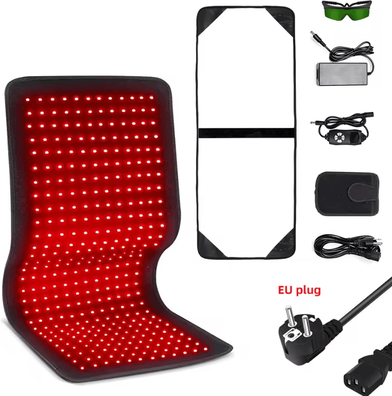
Uplift Curations Red And Infrared Therapy Belt Wearable LED Heating Wrap For Muscles, Joints And Recovery uk PlugSoothe tired muscles and unwind faster with this red light therapy belt, designed to bring targeted comfort right where you need it most. Combining red and infrared light with gentle heat, this wearable wrap helps support relaxation for sore areas...250,00 $*Shipping: 0,00 $Secure redirect to the provider
-
USA Free Shipping Shop 3D Printed Dinosaur T Rex Skeleton Fidget Toy Keychain With Flexible Rotating Joints 3D Printed Dinosaur T Rex Skeleton Fidget Toy Keychain With Flexible Rotating JointsEnjoy a fun piece of prehistoric adventure wherever you go. This 3D printed dinosaur combines eyecatching detail with flexible, rotating joints that make it satisfying to pose, display, or fidget with. Whether you're shopping for a young dinosaur...29,97 $*Shipping: 0,00 $Secure redirect to the provider
-
Forté Pharma Detox 5 Organs 500 mlNutrition and Supplements Natural Extracts Forté Pharma Detox 5 Organs 500 ml Forté Detox 5 Organs is a food supplement that includes a combination of plants such as artichoke, birch, chlorella, burdock, nettle, rosemary and lemon juice. Forté Detox 5 Organs is a formula highly concentrated in plant-based active ingredients for a comprehensive action. It combines several plants such as artichoke, lemon juice, birch, chlorella, rosemary and burdock, which help facilitate the body's eliminative functions and contribute to maintaining healthy skin(1). In addition, Forté Detox 5 Organs contains stinging nettle, which is notable for its silica content(2). Claims: (1)Burdock helps facilitate the body's eliminative functions and contributes to maintaining healthy skin. (2)Stinging nettle provides 2 mg of silica per daily dose. Caffeine-free, color-free, sugar-free, lactose-free, gluten-free, gelatin-free, aspartame-free. Contains mollusks, fish, and crustaceans. Directions for use: Shake before use. Take one 50 ml capful daily, diluted in a glass of water (200 ml), preferably in the morning. The recommended duration of use is 10 days. The program is renewable for 3 weeks with each change of season. Once opened, keep refrigerated and consume within 15 days.16,59 £*Shipping: 4,99 £Secure redirect to the provider


-
Does Australopithecus belong to its own genus or does it belong to the genus Homo?
Australopithecus belongs to its own genus separate from the genus Homo. Australopithecus is a genus of early hominins that lived in Africa around 4 to 2 million years ago, while the genus Homo includes modern humans and their close relatives. The distinction between Australopithecus and Homo is based on differences in physical characteristics, behavior, and evolutionary history. **
-
Why did researchers initially have doubts about assigning Lucy (Australopithecus afarensis) to the category of great apes?
Researchers initially had doubts about assigning Lucy to the category of great apes because of her bipedalism, which was a key characteristic of early human ancestors. Great apes, such as chimpanzees and gorillas, are primarily quadrupedal, meaning they walk on all fours. Lucy's skeletal structure, particularly her pelvis and knee joints, indicated that she walked upright on two legs, suggesting a closer relationship to humans rather than great apes. Additionally, her brain size and dental features were more similar to early humans than to great apes, further supporting her classification as a hominin rather than a great ape. **
-
Why can the discovery of Lucy, the Australopithecus, be considered a stroke of luck? How did she get her name?
The discovery of Lucy, the Australopithecus, can be considered a stroke of luck because she is one of the most complete early human fossils ever found, providing valuable insights into human evolution. Lucy got her name from the Beatles song "Lucy in the Sky with Diamonds," which was playing on repeat the night of her discovery in Ethiopia by paleoanthropologist Donald Johanson and his team in 1974. This serendipitous find has significantly contributed to our understanding of human origins and the evolutionary timeline. **
-
Why do some people find blood and organs disgusting?
Some people find blood and organs disgusting due to a combination of cultural, psychological, and evolutionary factors. Culturally, there may be taboos or stigmas surrounding blood and bodily organs, leading to a learned aversion. Psychologically, the sight of blood and organs may trigger a fear response or feelings of disgust, which can be influenced by individual differences in sensitivity and past experiences. From an evolutionary perspective, disgust towards blood and organs may have developed as a way to avoid potential sources of infection or disease, as they can carry pathogens. Overall, the aversion to blood and organs can be influenced by a complex interplay of cultural, psychological, and evolutionary factors. **


Do Pokémon have organs like flesh or muscles like a human?
Pokémon are fictional creatures, and their anatomy is not fully explained in the Pokémon universe. However, they are often depicted as having physical bodies with flesh, muscles, and other organs similar to those of real animals. In the Pokémon games, TV shows, and movies, they are shown to have physical forms and exhibit behaviors that suggest they have internal organs and musculature. While the specifics of their anatomy may not be fully detailed, it is generally understood that Pokémon have physical bodies with similar biological components to real animals. **
Are all organs of the human body surrounded by blood?
No, not all organs of the human body are surrounded by blood. While blood vessels do supply most organs with oxygen and nutrients, there are some organs that do not have direct blood supply, such as the cornea of the eye and the cartilage in joints. These organs receive nutrients and oxygen through diffusion from nearby blood vessels. **
Top-Angebote
Products related to Australopithecus:
-
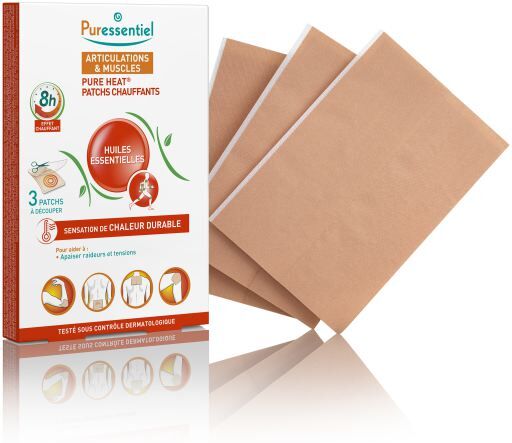
Puressentiel Pure Heat Heat Patches for Joints and Muscles, 3 pcsHealth and Beauty First aid kit Puressentiel Pure Heat Heat Patches for Joints and Muscles, 3 pcs Heating patches for muscles and joints help relax and relieve muscle tension. Its formula based on 100% natural ingredients, combining 14 essential oils and Capsicum, provides a pleasant sensation of heat for 8 hours, which promotes muscle relaxation. The flexible patch adapts to all movements. Heating patches for muscles and joints help relax and relieve muscle tension. Its formula is made from 100% natural ingredients, combining 14 essential oils (Cajeput, Roman Chamomile, Clove, Eucalyptus, Eastern Berry, Juniper, Lavandin, Marjoram, Mint, Niaouli, Nutmeg, Pine, Rosemary, Turpentine) and Capsicum. It provides a pleasant sensation of heat for 8 hours, which promotes muscle relaxation. The flexible patch adapts to all movements, is odorless, and can be cut to the desired size and applied directly to the following body areas: back, knees, neck, shoulders, elbows, wrists, thighs, calves. Directions: The patch should be applied to healthy, dry, non-greasy skin. It should not be applied to wounds, sensitive skin, the face, irritated skin, or mucous membranes, especially after waxing or shaving. Avoid applying it to areas of the body that may be constricted (tight clothing, the inner fold of the elbow, behind the knee, etc.). The patch produces a warming sensation, the intensity and duration of which varies depending on the individual's reaction. If you feel a burning sensation, develop a skin irritation, or develop an allergy, remove the patch immediately. Do not use it for more than 8 hours. Warnings: Not recommended for children under 15 years of age, pregnant or breastfeeding women, or people with a history of seizures or epileptic attacks. Do not use if you are allergic to salicylates or any of the ingredients. Keep out of reach of children.13,13 £*Shipping: 3,99 £Secure redirect to the provider
-
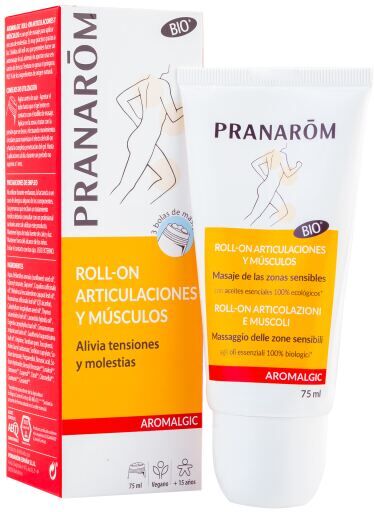
Pranarom Aromalgic Roll On Joints and Muscles 75 ml 75 mlHealth and Beauty First aid kit Pranarom Aromalgic Roll On Joints and Muscles 75 ml 75 ml What is Pranarom Aromalgic Roll On Joints and Muscles 75 ml? Pranarom Aromalgic Roll-On Joints and Muscles 75 ml is a natural treatment based on 100% pure and natural essential oils, designed to provide immediate and long-lasting relief to joints and muscles . Its roll-on format allows for precise, easy application without getting your hands dirty, ideal for use at any time of day. This product combines the soothing properties of essential oils such as eucalyptus, peppermint, clove, and wintergreen, all known for their benefits in treating muscle and joint pain. It is an effective option for those seeking natural relief without resorting to conventional pharmaceuticals. Who is it for? Pranarom Aromalgic Roll On Joints and Muscles 75 ml is indicated for: People with occasional or chronic joint pain. Athletes who need relief from muscle discomfort after exercise. Individuals who suffer from muscle tension due to stress or poor posture. Older adults with joint stiffness or discomfort. People who prefer natural solutions based on scientific aromatherapy. How do I apply it? Using Pranarom Aromalgic Roll On Joints and Muscles 75 ml is very simple thanks to its practical roll-on format: Shake before use to activate all ingredients. Apply directly to the affected area (shoulders, knees, neck, back, etc.). Glide the roll-on in a circular motion for a few seconds. Massage with your hands is not necessary, but you can do so if desired to increase product penetration. Use up to 3 times a day as needed. Product use Pranarom Aromalgic Roll-On Joints and Muscles 75 ml acts quickly and effectively to promote well-being and mobility , offering an immediate sensation of freshness followed by a comforting effect. Its notable uses include: **Relieve joint pain** caused by arthritis, osteoarthritis, or overload. **Reduce muscle tension** caused by stress, poor posture, or physical exertion. **Facilitate post-workout recovery**, ideal for athletes and active people. **Reduce morning stiffness** in older people or those with limited mobility. **Natural alternative to traditional topical pain relievers**, without harsh chemicals or systemic side effects. Thanks to its composition, rich in biochemically defined essential oils, this roll-on not only targets pain but also improves local circulation and promotes muscle tissue regeneration. Plus, its compact size makes it perfect for carrying in your purse, gym bag, or even in the car. Buy Pranarom Aromalgic Roll On Joints and Muscles 75 ml If you're looking for an effective, natural, and convenient solution to relieve your muscle and joint pain, Pranarom Aromalgic Roll-On Joints and Muscles 75 ml is your best choice. It provides fast relief thanks to the synergistic action of essential oils, in a convenient, portable format that adapts to your lifestyle. Place your order today and discover the benefits of aromatherapy applied to muscle...13,69 £*Shipping: 3,99 £Secure redirect to the provider
-
Uplift Curations Red And Infrared Therapy Belt Wearable LED Heating Wrap For Muscles, Joints And Recovery uk PlugSoothe tired muscles and unwind faster with this red light therapy belt, designed to bring targeted comfort right where you need it most. Combining red and infrared light with gentle heat, this wearable wrap helps support relaxation for sore areas...250,00 $*Shipping: 0,00 $Secure redirect to the provider
-
What is the difference between Homo afarensis and Australopithecus?
Homo afarensis and Australopithecus are both hominins that lived in East Africa around 3-4 million years ago. The main difference between the two is that Homo afarensis is considered to be more closely related to the genus Homo, which includes modern humans, while Australopithecus is considered to be a more distant ancestor. Additionally, Homo afarensis is believed to have had a more upright posture and walked bipedally more efficiently than Australopithecus. Lastly, Homo afarensis had a slightly larger brain size compared to Australopithecus. **
-
What is the difference between Australopithecus afarensis and Africanus?
Australopithecus afarensis and Africanus are both species of early hominins that lived in Africa around 3-4 million years ago. The main difference between the two species is their physical characteristics. Australopithecus afarensis, famously represented by the fossil "Lucy," had a more ape-like appearance with a smaller brain and longer arms, while Africanus had a more human-like appearance with a larger brain and shorter arms. Additionally, Africanus is believed to have had a more varied diet, including meat, while afarensis is thought to have primarily been a vegetarian. **
-
Does Australopithecus belong to its own genus or does it belong to the genus Homo?
Australopithecus belongs to its own genus separate from the genus Homo. Australopithecus is a genus of early hominins that lived in Africa around 4 to 2 million years ago, while the genus Homo includes modern humans and their close relatives. The distinction between Australopithecus and Homo is based on differences in physical characteristics, behavior, and evolutionary history. **
-
Why did researchers initially have doubts about assigning Lucy (Australopithecus afarensis) to the category of great apes?
Researchers initially had doubts about assigning Lucy to the category of great apes because of her bipedalism, which was a key characteristic of early human ancestors. Great apes, such as chimpanzees and gorillas, are primarily quadrupedal, meaning they walk on all fours. Lucy's skeletal structure, particularly her pelvis and knee joints, indicated that she walked upright on two legs, suggesting a closer relationship to humans rather than great apes. Additionally, her brain size and dental features were more similar to early humans than to great apes, further supporting her classification as a hominin rather than a great ape. **
Similar search terms for Australopithecus
-
USA Free Shipping Shop 3D Printed Dinosaur T Rex Skeleton Fidget Toy Keychain With Flexible Rotating Joints 3D Printed Dinosaur T Rex Skeleton Fidget Toy Keychain With Flexible Rotating JointsEnjoy a fun piece of prehistoric adventure wherever you go. This 3D printed dinosaur combines eyecatching detail with flexible, rotating joints that make it satisfying to pose, display, or fidget with. Whether you're shopping for a young dinosaur...29,97 $*Shipping: 0,00 $Secure redirect to the provider
-
Forté Pharma Detox 5 Organs 500 mlNutrition and Supplements Natural Extracts Forté Pharma Detox 5 Organs 500 ml Forté Detox 5 Organs is a food supplement that includes a combination of plants such as artichoke, birch, chlorella, burdock, nettle, rosemary and lemon juice. Forté Detox 5 Organs is a formula highly concentrated in plant-based active ingredients for a comprehensive action. It combines several plants such as artichoke, lemon juice, birch, chlorella, rosemary and burdock, which help facilitate the body's eliminative functions and contribute to maintaining healthy skin(1). In addition, Forté Detox 5 Organs contains stinging nettle, which is notable for its silica content(2). Claims: (1)Burdock helps facilitate the body's eliminative functions and contributes to maintaining healthy skin. (2)Stinging nettle provides 2 mg of silica per daily dose. Caffeine-free, color-free, sugar-free, lactose-free, gluten-free, gelatin-free, aspartame-free. Contains mollusks, fish, and crustaceans. Directions for use: Shake before use. Take one 50 ml capful daily, diluted in a glass of water (200 ml), preferably in the morning. The recommended duration of use is 10 days. The program is renewable for 3 weeks with each change of season. Once opened, keep refrigerated and consume within 15 days.16,59 £*Shipping: 4,99 £Secure redirect to the provider
-
Equisalud Vibroextract Nervous System 50 mlNutrition and Supplements Special supplements Equisalud Vibroextract Nervous System 50 ml Take 1ml. (equiv. 30 drops) 3 times per day or more. Dissolve drops in half a glass of water. Components: - Basil - Ginseng - Lavender - Lemon Balm - Passion flower - St Johns wort - Sweet marjoram - Sweet Orange 50ml.20,04 £*Shipping: 3,99 £Secure redirect to the provider
-
Forté Pharma Detox 5 Organs 2 x 500 mlNutrition and Supplements Natural Extracts Forté Pharma Detox 5 Organs 2 x 500 ml Forté Detox 5 Organs is a food supplement that includes a combination of plants such as artichoke, birch, chlorella, burdock, nettle, rosemary and lemon juice. Forté Detox 5 Organs is a formula highly concentrated in plant-based active ingredients for a comprehensive action. It combines several plants such as artichoke, lemon juice, birch, chlorella, rosemary and burdock, which help facilitate the body's eliminative functions and contribute to maintaining healthy skin(1). In addition, Forté Detox 5 Organs contains stinging nettle, which is notable for its silica content(2). Claims: (1)Burdock helps facilitate the body's eliminative functions and contributes to maintaining healthy skin. (2)Stinging nettle provides 2 mg of silica per daily dose. Caffeine-free, color-free, sugar-free, lactose-free, gluten-free, gelatin-free, aspartame-free. Contains mollusks, fish, and crustaceans. Directions for use: Shake before use. Take one 50 ml capful daily, diluted in a glass of water (200 ml), preferably in the morning. The recommended duration of use is 10 days. The program is renewable for 3 weeks with each change of season. Once opened, keep refrigerated and consume within 15 days.16,01 £*Shipping: 4,99 £Secure redirect to the provider
-
Why can the discovery of Lucy, the Australopithecus, be considered a stroke of luck? How did she get her name?
The discovery of Lucy, the Australopithecus, can be considered a stroke of luck because she is one of the most complete early human fossils ever found, providing valuable insights into human evolution. Lucy got her name from the Beatles song "Lucy in the Sky with Diamonds," which was playing on repeat the night of her discovery in Ethiopia by paleoanthropologist Donald Johanson and his team in 1974. This serendipitous find has significantly contributed to our understanding of human origins and the evolutionary timeline. **
-
Why do some people find blood and organs disgusting?
Some people find blood and organs disgusting due to a combination of cultural, psychological, and evolutionary factors. Culturally, there may be taboos or stigmas surrounding blood and bodily organs, leading to a learned aversion. Psychologically, the sight of blood and organs may trigger a fear response or feelings of disgust, which can be influenced by individual differences in sensitivity and past experiences. From an evolutionary perspective, disgust towards blood and organs may have developed as a way to avoid potential sources of infection or disease, as they can carry pathogens. Overall, the aversion to blood and organs can be influenced by a complex interplay of cultural, psychological, and evolutionary factors. **
-
Do Pokémon have organs like flesh or muscles like a human?
Pokémon are fictional creatures, and their anatomy is not fully explained in the Pokémon universe. However, they are often depicted as having physical bodies with flesh, muscles, and other organs similar to those of real animals. In the Pokémon games, TV shows, and movies, they are shown to have physical forms and exhibit behaviors that suggest they have internal organs and musculature. While the specifics of their anatomy may not be fully detailed, it is generally understood that Pokémon have physical bodies with similar biological components to real animals. **
-
Are all organs of the human body surrounded by blood?
No, not all organs of the human body are surrounded by blood. While blood vessels do supply most organs with oxygen and nutrients, there are some organs that do not have direct blood supply, such as the cornea of the eye and the cartilage in joints. These organs receive nutrients and oxygen through diffusion from nearby blood vessels. **
* All prices are inclusive of VAT and, if applicable, plus shipping costs. The offer information is based on the details provided by the respective shop and is updated through automated processes. Real-time updates do not occur, so deviations can occur in individual cases. ** Note: Parts of this content were created by AI.